
What Is Riprap? A Clear, Practical Answer
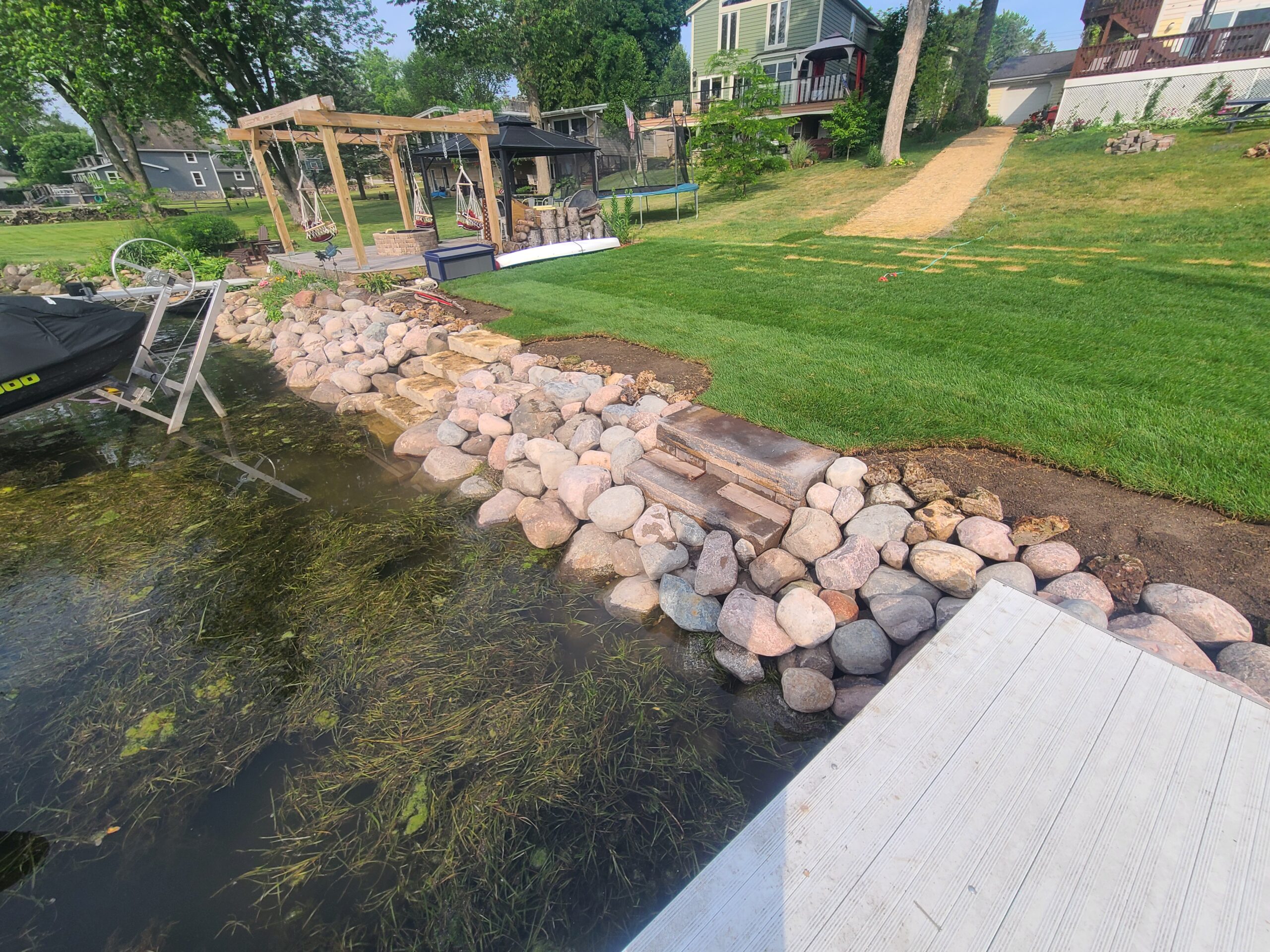
If you are wondering what is rip rap and whether it is right for your shoreline, you are not alone. Riprap is a layer of large, angular rock placed along a shoreline to protect against erosion from waves, boat wakes, wind, and ice. You may also hear it called rock armor or a rock revetment. The stones break up wave energy, hold soil in place, and create a stable, natural-looking edge that can last for decades when designed and installed correctly. For lakefront homeowners and commercial properties in Southeast Wisconsin, riprap is one of the most reliable ways to protect land and maintain safe, usable waterfront space. Koch Kuts designs and installs riprap systems that match your shoreline conditions, budget, and aesthetic goals.
How Riprap Protects Your Shoreline
On lakes and rivers, water and ice are always on the move. When waves hit soft soil or a steep bank, they pull sediment away and undercut the shoreline. Over time, you lose land and end up with hazardous drop-offs and muddy water. Riprap works by absorbing and redirecting that energy before it can damage the bank. The open voids between the stones slow water and trap sediment, while the weight of the rock mass holds the bank in place.
- Reduces erosion from waves and boat wakes
- Defends against ice push and winter freeze-thaw cycles
- Stabilizes steep or sandy banks
- Lowers long-term maintenance and repair costs
- Improves water clarity by limiting sediment washout
- Creates a natural look that blends with native landscapes
- Supports fish and aquatic habitat in many settings
Why Southeast Wisconsin Shores Benefit From Rock Armor
Our local lakes face frequent wake action, seasonal water level swings, and winter ice movement. Many shorelines around Burlington, Waterford, Mukwonago, Lake Geneva, and Racine also include sandy soils and steep grades that are prone to slumping. Well-designed riprap from Koch Kuts provides the strength and durability needed to handle these conditions while preserving the character of your waterfront.
Do You Need Riprap? Signs To Watch For
Not every shoreline needs rock armor, but certain clues suggest that riprap will protect your property and save you money over time.
- Exposed roots and undercut banks
- Soil slumping after storms
- Noticeable land loss year over year
- Muddy water near the shore during normal wind or boat traffic
- Ice shove ridges in spring
- Footing is unsafe or the edge is crumbling where people access the water
- Hard structures like old timbers or concrete are tipping or failing
If you see one or more of these, a site visit can confirm if riprap is a smart solution. Koch Kuts offers shoreline evaluations and clear recommendations tailored to your unique lakefront.
Types of Riprap and Rock Choices
Common Materials
Different stone types offer specific advantages. Your site and goals will guide the selection.
- Fieldstone: Rounded, multicolored stones with a natural Wisconsin look. Best for low to moderate energy sites. Often paired with larger toe stones for extra stability.
- Limestone: Locally available, angular, and cost effective. The fractured faces interlock well, creating a firm mass that resists movement.
- Granite: Very durable and angular. Holds up well to ice and high-energy waves. Often costs more due to sourcing and transport.
- Recycled Concrete: Useful in some settings and budgets, though aesthetics and uniformity can vary. Often better reserved for hidden toe reinforcement.
Stone Size and Gradation
Stone size matters for performance. A mix of sizes locks together, fills voids, and resists movement. Typical shoreline projects use armor stone between 6 and 24 inches in diameter, with the largest pieces placed at the toe or base.
- 6 to 12 inch stone: Works for smaller lakes and protected coves with gentle wave action
- 12 to 18 inch stone: Performs well on many Wisconsin lakes with moderate wave energy
- 18 to 24 inch stone: Chosen for high-wave or ice-prone areas
- Chinking or spall rock: Smaller stones used to lock larger pieces and reduce voids
A proper gradation is just as important as size. Koch Kuts uses a tested mix so the riprap interlocks, packs tightly, and stays put through storms and winter.
Design and Installation Best Practices
Good shoreline protection starts with the right design. The following elements are standard in a strong, long-lasting riprap system.
- Site assessment: Measure slope, soil type, wave exposure, water depth, and access points.
- Erosion control: Install silt fence or turbidity barriers as needed to protect water quality during work.
- Shaping and grading: Regrade the bank to a stable slope, often between 2:1 and 3:1 depending on soil and site conditions.
- Filter layer: Place a quality nonwoven geotextile fabric over the prepared slope to prevent soil from washing out through the stones while allowing drainage.
- Toe trench: Excavate a shallow trench at the waterline and set larger toe stones below the normal water level to prevent downward sliding and undermining.
- Armor placement: Place the larger armor stones first, working from the toe up the slope. Set each stone to interlock and avoid straight seams.
- Chinking: Fill gaps with smaller rocks to lock the structure and create a stable surface.
- Finish grade and buffer: Blend the top edge with topsoil and install a native plant buffer to control runoff and add a soft, green transition.
- Cleanup and inspection: Rake, compact, and verify slopes, stone coverage, and fabric coverage. Remove temporary erosion controls once the site stabilizes.
Koch Kuts plans access routes to limit lawn disturbance, stages material efficiently, and coordinates timing to respect lake rules and your schedule. The result is a clean, strong shoreline that looks like it belongs.
How Much Does Riprap Cost in Southeast Wisconsin?
Costs vary based on stone size, shoreline height, access, and permit needs. As a general guide, many residential riprap projects in our area fall between 90 and 250 dollars per linear foot for a complete, professional installation. Larger stone, taller banks, limited access, or barge work can push costs higher. Smaller, low-energy edges can come in lower. Stone itself can range from about 45 to 110 dollars per ton, and a typical shoreline may need 1 to 2 tons per linear foot depending on thickness and height. Every site is different, which is why a detailed quote matters. Koch Kuts provides clear, itemized estimates so you know exactly what you are paying for and why.
What Drives Price
- Wave energy and ice pressure that require larger stone
- Slope and height of the bank
- Access for equipment and material delivery
- Length of shoreline and project staging needs
- Permit requirements and compliance measures
- Choice of stone type and desired appearance
We help you balance performance, durability, and curb appeal. Ask about phasing, plantings, and maintenance plans that protect your investment over the long term.
Permits and Rules in Wisconsin
Many shoreline projects require approval from the Wisconsin Department of Natural Resources and your county or municipality. Some riprap work may qualify for a general permit if it meets specific standards. Other projects need an individual permit, especially in sensitive areas. You may also need to follow local shoreland zoning rules, floodplain rules, or HOA guidelines.
- Contact WDNR or your county zoning office to understand requirements for your property and waterbody.
- Document existing erosion with photos and measurements.
- Prepare a site plan that shows slope, proposed stone size and thickness, filter fabric, and access route.
- Submit permit applications and pay fees as required.
- Schedule work within allowed dates and follow erosion control measures during construction.
Permitting can feel complex. Koch Kuts guides homeowners and businesses through the process and coordinates with agencies to keep your project on track and in compliance.
Maintenance and Lifespan
A quality riprap installation offers decades of service. Routine checks help it last even longer.
- Inspect after major storms or spring thaw for any displaced stones
- Re-chink gaps with smaller rock if needed
- Keep foot traffic off steep areas
- Trim or replace plantings along the top edge as needed
- Clear woody debris that may wedge and shift stones
Most riprap systems last 25 years or more with minimal upkeep. If you ever notice undermining at the toe or settlement along the top edge, call Koch Kuts for a prompt assessment and tune-up.
Alternatives and Enhancements
Not every site needs full rock armor. Sometimes a hybrid or softer approach fits better with your goals or regulatory requirements.
- Native plant buffers to hold soil and absorb runoff
- Coir fiber logs and live stakes for low-energy coves
- Terraced grades with stone outcrops for steep banks
- Rain gardens to manage upland runoff before it reaches the shore
- Selective boulder clusters to break waves and enhance habitat
Hard seawalls have their place but often reflect wave energy, which can worsen erosion nearby. In many cases, riprap is a more natural, resilient solution that works with the water instead of against it. Koch Kuts can compare options and design a shoreline plan that fits your property and preferences.
Common Myths About Riprap
- Myth: Riprap kills the shoreline. Reality: When designed with the right stone size and a native buffer, riprap can support habitat and improve water clarity.
- Myth: Any rock will do. Reality: Proper gradation, placement, and toe support are critical to performance and longevity.
- Myth: It is a quick DIY project. Reality: Shoreline work demands careful design, equipment, and often permits. Professional installation pays off.
- Myth: Riprap needs no maintenance. Reality: Simple inspections and occasional touchups protect your investment.
- Myth: Permits are optional. Reality: Compliance protects lakes and property owners. Koch Kuts can help you navigate the process.
Why Homeowners and Businesses Choose Koch Kuts
Koch Kuts is a full-service landscaping and hardscaping company based in Burlington, Wisconsin, with more than 25 years of experience. We transform outdoor spaces across Southeast Wisconsin with solutions that look great and work hard year after year. Our shoreline restoration services combine engineering know-how with craftsmanship so you get lasting protection and curb appeal.
- Local expertise on Burlington, Waterford, Mukwonago, Lake Geneva, and Racine area lakes
- Custom designs tailored to your site, budget, and style
- Skilled crews and right-sized equipment to minimize lawn disturbance
- Honest, detailed estimates and clear communication
- Turnkey service that can include landscaping, retaining walls, and paver patios to complete your waterfront
- Commitment to quality workmanship and excellent customer service
From seasonal lawn care to outdoor fireplaces and pool hardscapes, Koch Kuts delivers cohesive outdoor environments that add value and enjoyment. Learn more or request a free estimate at kochkuts.com.
FAQ: Riprap and Your Lakefront
What is rip rap compared to a seawall?
Riprap is a sloped layer of rock that absorbs and diffuses wave energy. A seawall is a vertical structure that reflects waves. Riprap often offers a more natural look, better habitat potential, and less wave reflection. Seawalls can be right for certain sites but may increase erosion nearby.
How long does installation take?
Small residential projects can take a few days once permits and materials are ready. Larger or more complex sites may take one to two weeks. Weather, access, and permit timing are the biggest schedule drivers. Koch Kuts builds a clear plan and keeps you informed from start to finish.
Can riprap improve habitat?
Yes. Voids between stones offer refuge for small fish and invertebrates. Pairing rock with native shoreline plants and a gentle slope creates a stable transition that supports wildlife. We can include fish crib features or mixed stone sizes to encourage habitat diversity.
Will ice damage my riprap?
Ice can push on shorelines, but proper toe support, interlocking stones, and a stable slope help resist ice movement. Periodic inspection after spring thaw is a good idea. If any stones shift, they can be reset quickly to prevent larger issues.
Do I need to adjust my pier or dock after installing riprap?
Not usually. We design the top edge to blend with your existing grade and transitions. If access steps or a landing are needed, Koch Kuts can integrate them into the design so you have safe, easy water access.
Next Steps: Find Out If Riprap Is Right for You
If you have been asking what is rip rap and whether it makes sense for your lakefront, the best next step is a site visit. Koch Kuts will evaluate erosion, wave exposure, soil conditions, and access, then provide a clear plan and estimate. We can also help with permits, coordinate installation, and add finishing touches like plantings or a paver patio. Protect your shoreline and enjoy your waterfront with confidence. Contact Koch Kuts today to discuss your project or request a free estimate at kochkuts.com.


