
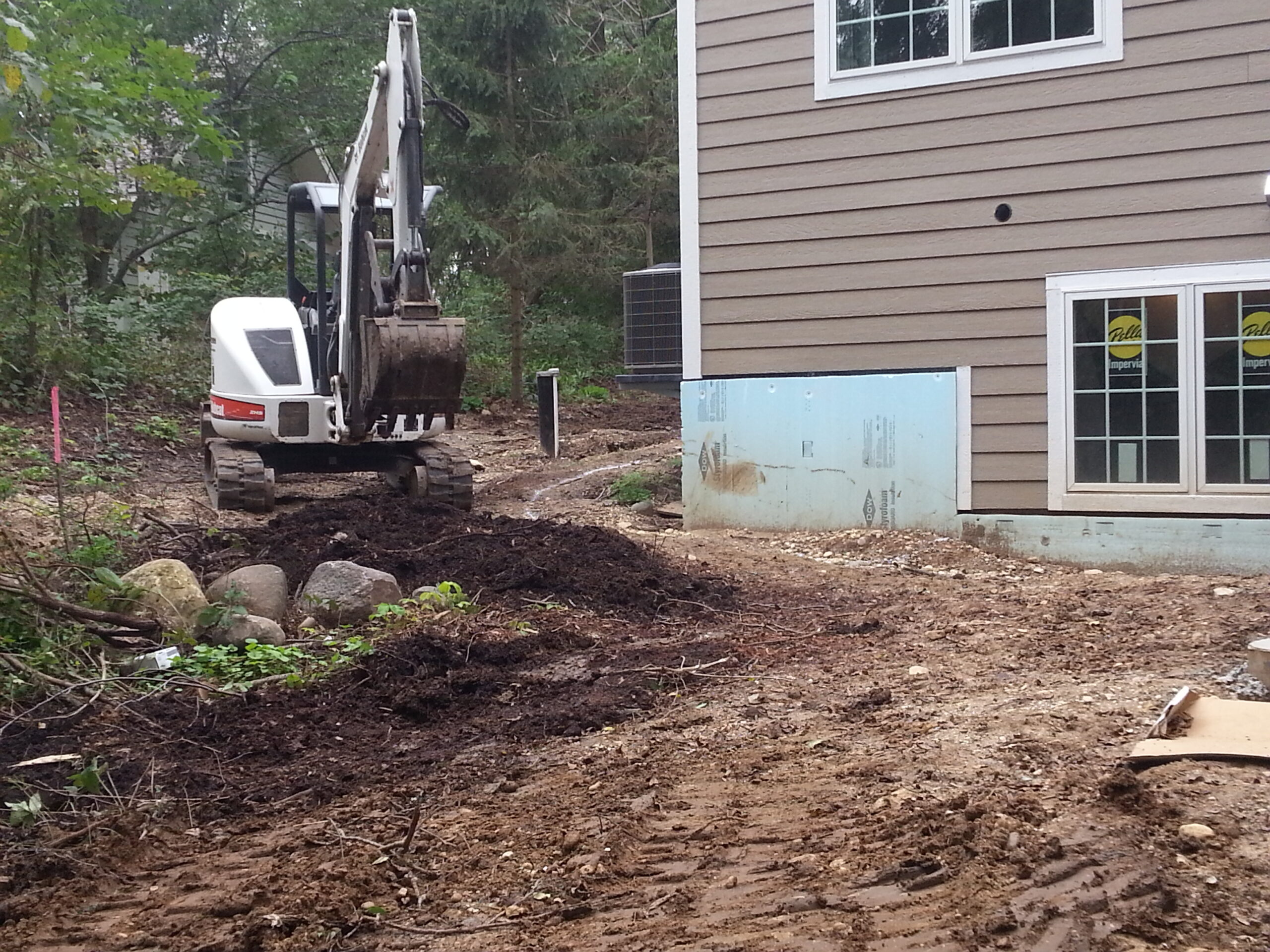
Backyard drainage solutions to fix muddy yards start with knowing what causes soggy spots, then matching the right system to your property, budget, and goals. In this guide, Koch Kuts shares proven options, costs, and expert tips so you can stop the mess and get your yard back.
Why Your Yard Is Always Muddy
Mud shows up when water has nowhere to go. In Southeast Wisconsin, heavy clay soils, freeze-thaw cycles, and seasonal storms make poor drainage a common issue. If your lawn stays soft for days after rain, or puddles form in the same places, you likely have one or more of the problems below.
- Compacted soil that stops water from moving into the ground
- Clay soil with naturally slow infiltration
- Low spots or dips that trap runoff
- Improper grading that tilts water toward structures
- Short downspouts that dump water near the foundation
- High water table near lakes and wetlands
- Irrigation leaks or overspray that saturate the lawn
- Thatch buildup and dense turf that block absorption
- Heavy foot or equipment traffic that seals the soil surface
Not all muddy yards are the same. A shaded backyard with clay soil needs different fixes than a sunny slope with fast runoff. The best backyard drainage solutions fit the land and the way you use it. That is where a skilled contractor like Koch Kuts can help with a plan that works the first time.
Backyard Drainage Solutions That Actually Work
Regrading and Swales
Regrading shapes your yard so water flows away from your house and off low spots. A shallow, grassed swale is a gentle channel that carries surface water to a safe outlet. Regrading is often the first and most important step because it fixes the root path of water across the site.
French Drains
A French drain is a trench with perforated pipe wrapped in fabric and gravel. It collects subsurface water and moves it to a discharge point. French drains work well along wet fence lines, at the base of slopes, or to intercept flow before it reaches patios and basements.
Downspout Extensions and Buried Lines
Gutters can move thousands of gallons during a storm. Extending downspouts 10 to 20 feet from the house, either on the surface or through buried solid pipe, stops water from pooling by your foundation and reduces muddy areas near beds and walkways.
Dry Wells and Seepage Pits
Dry wells store runoff underground, then slowly release it into surrounding soil. They are useful where storm sewers are not available and space is tight. Pair them with downspout lines or French drains to capture peak flows during heavy rains.
Catch Basins and Channel Drains
In hardscape areas where water collects, a catch basin or trench style channel drain collects surface water and routes it to pipe. These are common along driveway low points, patio edges, and at garage doors to prevent standing water and ice.
Rain Gardens and Bioswales
Rain gardens are shallow, planted basins that hold water temporarily after storms. Deep-rooted native plants take up water and improve infiltration while adding curb appeal and pollinator value. Bioswales are similar but shaped like swales with engineered soil for better flow and soak-in.
Permeable Pavers and Gravel Systems
Permeable paver patios, walkways, and driveways let water pass through joints into a deep stone base. This reduces runoff and puddling on the surface. Modern systems look high end and are reliable when installed with proper base depth and edge support.
Retaining Walls With Drainage
On slopes, a retaining wall can create flat, usable areas. Behind the wall, drainage stone, fabric, and weep holes or drain pipe relieve water pressure and guide water away from the wall face. When combined with grading, this can solve both erosion and mud.
Sump Pump Discharge Management
If your home has a sump pump, make sure discharge water is carried far from the foundation. A buried line that runs to a daylit outlet or an approved storm connection helps prevent a cycle of water soaking back into your yard and basement.
Lawn Aeration and Soil Improvement
Core aeration pulls plugs from the soil to reduce compaction and allow air and water to move downward. Over time, adding compost and topdressing can improve clay-heavy areas. While aeration alone will not fix major drainage issues, it supports long term performance of other solutions.
How to Choose the Right System
The best system depends on your land, soil, house layout, and budget. Use the guide below to narrow the choices, then confirm with a site review.
- Small muddy spot near a downspout: Extend or bury the downspout and add a small dry well
- Repeated puddles in the middle of the lawn: Regrade low spots and consider a French drain to collect subsurface water
- Water running toward the house: Re-slope the grade and install a swale to divert flow
- Patio or driveway that holds water: Add a channel drain tied to solid pipe or rebuild with permeable pavers
- Shady, clay-heavy yard: Combine aeration, compost topdressing, and a rain garden for slow release
- Steep slope with erosion: Terracing with a retaining wall and built-in drainage
- High water table near lakes: Use shallow surface solutions, secure proper outlets, and consider shoreline restoration
Pros and Cons of Common Backyard Drainage Solutions
French Drains
- Pros: Works below the surface, handles persistent wet zones, long lasting when built right
- Cons: Requires excavation, careful fabric and gravel selection, must have a suitable outlet
Regrading and Swales
- Pros: Addresses root cause, no mechanical parts, improves overall yard function
- Cons: Disturbs lawn, may need new sod or seed, requires enough space to shape flow
Downspout Extensions
- Pros: Fast, low cost, high impact near foundations
- Cons: Surface extensions can be tripping hazards unless buried
Dry Wells
- Pros: Good for limited space, pairs well with roof runoff
- Cons: Not ideal in tight clay or high water table zones without soil improvement
Permeable Pavers
- Pros: Solves puddles on hard surfaces, premium look, reduces runoff
- Cons: Higher upfront cost, needs expert base installation
Rain Gardens
- Pros: Beautiful, eco-friendly, supports pollinators, handles peak flows
- Cons: Needs proper plant selection and seasonal care
DIY or Hire a Pro?
Some fixes are easy to do yourself. Others are worth hiring a pro like Koch Kuts, especially when grading, excavation, or tying into multiple systems is required.
Good DIY Candidates
- Adding gutter extensions
- Basic soil aeration and compost topdressing
- Small rain gardens with simple grading
Best Handled by a Professional
- Regrading large areas near a home or commercial building
- Installing French drains, catch basins, or channel drains
- Dry wells sized to code or tied into storm systems
- Permeable paver patios and driveways with engineered base
- Retaining walls that need proper drainage and structural design
- Shoreline restoration that must meet local and state rules
A professional team brings design, equipment, and local code knowledge. Koch Kuts has over 25 years of experience in Southeast Wisconsin and knows how soils and seasons affect performance. You get a system built to last, not a band aid fix.
The Koch Kuts Approach to Lasting Drainage
Every property is unique. Koch Kuts follows a structured process to make sure your backyard drainage solutions solve the right problems and look good doing it.
- Site Assessment: Inspect grading, soil type, downspouts, hardscapes, and vegetation. Identify flow paths and saturation points.
- Design Options: Present one or more drainage plans that match your goals, with clear pros and cons.
- Precision Grading: Use laser guided equipment to set correct slopes around your home and across the yard.
- Drainage System Build: Install French drains, dry wells, swales, or catch basins with proper depth, fabric, and aggregate.
- Hardscape Integration: Add permeable paver patios, retaining walls with drains, or channel drains that blend with your design.
- Soil and Turf Rehab: Aerate and amend soil, then sod or seed so the lawn recovers quickly.
- Quality Check and Education: Test flow, review maintenance steps, and leave you with a finished space that stays drier.
Koch Kuts serves Burlington, Waterford, Mukwonago, Lake Geneva, Racine, and nearby communities. Whether you manage a commercial site or want a clean backyard for family use, our team delivers reliable results.
What Will It Cost?
Costs vary by size, soil, access, and materials. The ranges below are typical for Southeast Wisconsin and include professional installation. Your estimate may differ after a site review.
- Downspout Extensions and Buried Lines: 10 to 20 feet per line often runs $300 to $1,200 depending on depth, obstacles, and outlet
- Regrading and Swales: Light grading for a small yard can start around $1,200 to $3,000. Larger or complex re-slopes range from $3,000 to $8,000 or more
- French Drains: Commonly $20 to $45 per linear foot, depending on depth, stone size, fabric, and restoration needs
- Dry Wells: $1,500 to $4,500 for most residential systems, more if large storage or complex soils are involved
- Catch Basins and Channel Drains: $800 to $3,500 depending on length, grate type, and discharge routing
- Permeable Paver Surfaces: $18 to $35 per square foot for patios and walkways. Driveways can be higher due to added base depth
- Retaining Walls With Drainage: $45 to $85 per square foot of wall face, varying by block style and site access
- Lawn Aeration and Compost Topdressing: $200 to $800 depending on yard size and material
Smart design can combine systems to control costs. For example, a regrade with extended downspouts might solve 80 percent of your issue, while a short French drain handles the stubborn area that remains.
Timing, Weather, and Soil Considerations
Spring through fall is prime time for drainage work. Soil should be workable and not frozen for best results. In clay-heavy yards, installing systems during drier weeks allows cleaner trenching and better compaction around new pipe. If you plan to seed or sod, late spring and early fall offer ideal conditions for fast rooting.
Permits, Codes, and Best Practices
Some drainage projects require permits or adherence to local codes, especially when connecting to municipal storm systems or working near shorelines. A professional like Koch Kuts will guide you through requirements and secure any needed approvals.
- Call before you dig. Always request utility locates through Diggers Hotline in Wisconsin.
- Discharge responsibly. Do not direct water onto a neighbor’s property or across sidewalks where ice can form.
- Protect shorelines. Work within Department of Natural Resources guidelines and local ordinances for lakes and waterways.
- Use the right materials. Washed stone, quality fabric, and Schedule 40 or SDR-rated pipe increase system life.
Care and Maintenance for Long Life
Good drainage systems are low maintenance, but a few habits keep them working well.
- Clean gutters twice a year so lines do not clog with shingle grit or leaves
- Check downspout outlets and pop-ups after big storms
- Keep channel drain grates clear of debris
- Aerate lawns yearly if soil compaction returns
- Refresh mulch and check plant health in rain gardens each season
Frequently Asked Questions
Will a French drain freeze in winter?
In very cold snaps the top few inches can freeze, but properly built French drains are set below frost depth or protected by stone and fabric. They still move water during thaws because the subsurface stays warmer than the air.
How long does a drain system last?
With quality materials and correct installation, French drains and buried lines can last 20 years or more. Most problems come from poor fabric choice, wrong stone, or outlets that get blocked. Koch Kuts uses materials and practices that resist clogging and shifting.
Will a rain garden attract mosquitoes?
No, if designed right. Rain gardens should drain within 24 to 48 hours. That is too fast for mosquito breeding. The right soil mix and plants help water soak in quickly.
Can I fix drainage with more topsoil?
Adding soil can help smooth small dips, but it will not solve a grade that slopes the wrong way. If water still flows toward the house or collects in a basin, regrading or a drain system is the better answer.
What if I have a septic system?
Keep drainage work clear of septic tanks and fields. You do not want to overload or disturb them. A site plan will map safe routes and outlets.
Can I install a channel drain on an existing patio?
Often yes. A section of the slab or pavers can be cut to place the channel, then tied into a discharge line. In some cases it is smarter to rebuild with permeable pavers for a complete fix.
How soon can I use my yard after work is done?
You can usually walk on hardscapes right away. For lawn areas, allow seed or sod to root for two to four weeks depending on season. Your crew will give specific guidelines at handoff.
Why Choose Koch Kuts for Backyard Drainage Solutions
Koch Kuts is a full service landscaping and hardscaping company based in Burlington, Wisconsin. For over 25 years, we have helped homeowners and businesses across Southeast Wisconsin turn soggy yards into dry, usable spaces. Our team blends grading skill, drainage design, and premium hardscape builds to deliver results that look great and last.
We offer landscaping services like lawn and grounds maintenance, core aeration, seasonal lawn care, and snow removal. Our hardscaping team installs paver patios, retaining walls, outdoor fireplaces, pool hardscapes, and shoreline restoration. We also handle excavation and grading for building pads, premium driveways, and fence line clearing. When your project calls for a single partner who can do it all, Koch Kuts is ready.
Get Started Today
If muddy spots are keeping you from enjoying your yard, do not wait for another storm. The right backyard drainage solutions can protect your home, reduce maintenance, and add value. Koch Kuts serves Burlington, Waterford, Mukwonago, Lake Geneva, Racine, and surrounding areas with friendly service and quality workmanship. Request your free estimate at kochkuts.com and let our team design a dry, beautiful outdoor space you can use in every season.


