
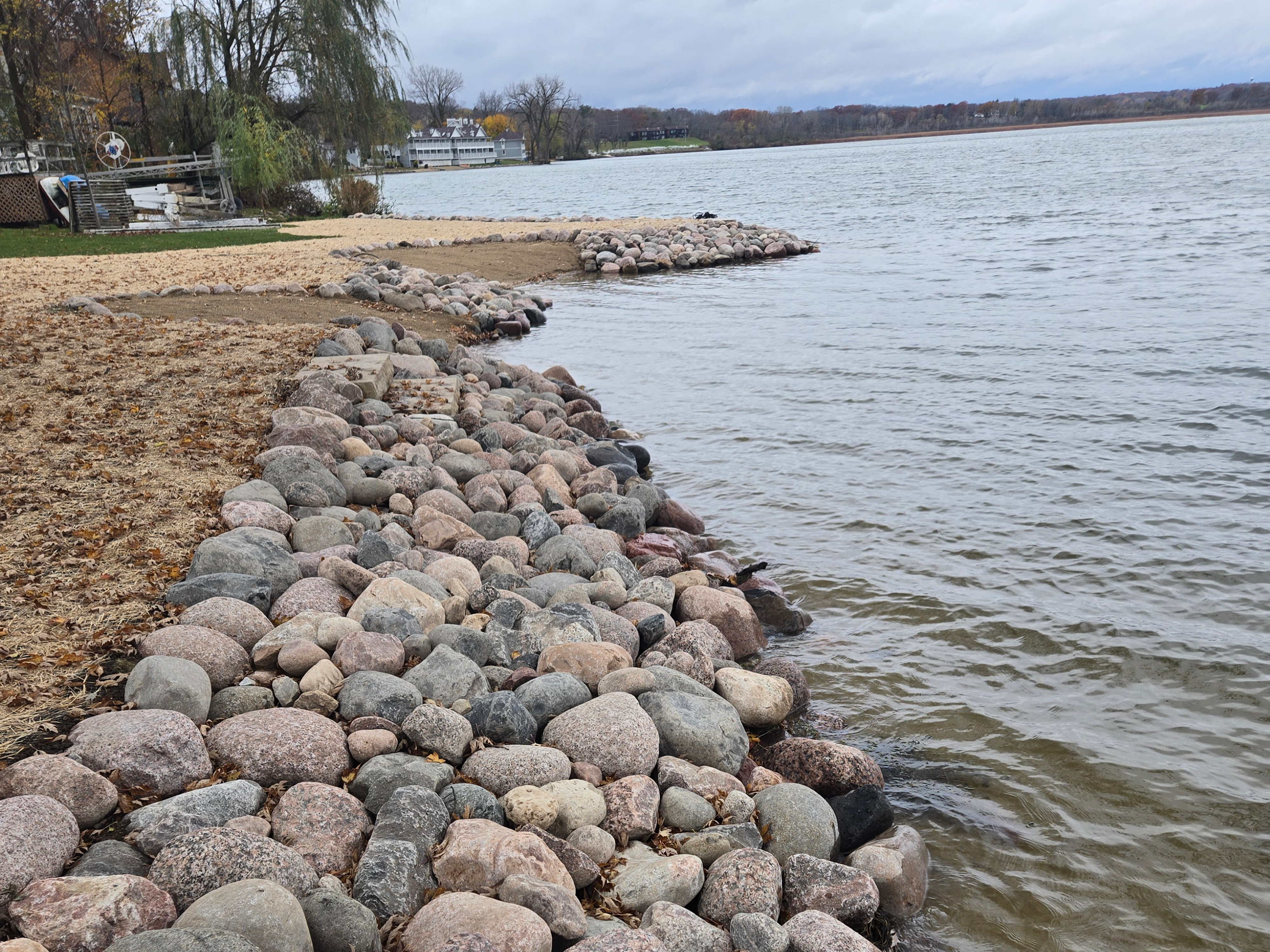
Riprap rock is the top choice for shoreline erosion control. It protects your waterfront from waves, ice, and storm runoff while blending naturally with the landscape. In this guide, the team at Koch Kuts explains how riprap works, the best rock sizes for different sites, estimated costs, and key installation tips to make your shore strong and beautiful for years.
Why Shorelines Erode in Wisconsin
Shorelines in Southeast Wisconsin face constant stress. Waves from wind and passing boats pound the bank. Water levels change seasonally. Ice pushes and pulls on the shore each winter. Stormwater from nearby lawns or hills speeds up erosion. Without protection, soil washes away and shorelines recede. This can expose roots, damage lawns and patios, and threaten docks, seawalls, and buildings. The right stone protection locks the bank in place and breaks up wave energy before it reaches your soil.
What Is Riprap Rock?
Riprap rock is a layer of large, angular stone placed along the shoreline to absorb and deflect wave energy. It is also called armor stone or rock revetment. Unlike smooth river rock, good riprap has fractured faces that interlock. When the stones lock together, water loses force as it moves through the gaps. This stops soil from washing out. A properly designed riprap system includes graded layers and geotextile fabric to prevent fine soils from migrating through the rock during storms or high water.
Best Rock Types for Riprap
The best rock for shoreline erosion is hard, durable, and angular. In Southeast Wisconsin, three options are common. Each has strengths depending on site goals and budget.
Limestone Riprap
Limestone riprap is widely available in our region and is a popular, cost-effective choice. It has strong angular faces that interlock well. It looks natural along lakes and rivers across Wisconsin. When sized and installed correctly, limestone riprap provides excellent wave protection at an attractive price point. Quality matters. Choose dense, quarry-grade limestone that resists weathering.
Granite Riprap
Granite riprap is very hard and offers outstanding long-term durability. It tends to cost more due to quarrying and transportation. Granite holds color well and resists freeze-thaw cycles. For shorelines exposed to heavy wave action or ice shove, granite riprap can be a smart long-term investment.
Fieldstone Riprap
Fieldstone has a rounded look that some property owners love. It can blend beautifully with a natural setting. For performance, angular stone usually interlocks better than smooth stone, so fieldstone may require larger sizes or thicker layers. Many projects use a blend of angular quarry stone with selected fieldstone accents for a balanced look and strong performance.
Riprap Rock Sizes and When to Use Each
Picking the right size is just as important as picking the right rock type. Larger stones resist stronger waves and ice movement. Smaller stones fit well on gentle slopes and in low energy areas.
- 3 to 6 inch riprap rock. Best for small drainage channels, mild currents, and as a bedding or transition layer beneath larger armor stone. Not ideal for lakefront wave zones on its own.
- 6 to 12 inch riprap rock. Good general protection for calm to moderate shorelines, ponds, and small lakes with limited boat traffic. Works well on gentle slopes with a firm base.
- 12 to 18 inch riprap rock. A strong choice for many Wisconsin lakes with moderate boat wake and seasonal ice. Provides solid interlock and weight against wave action.
- 18 to 24 inch riprap rock. Ideal for exposed shorelines with strong winds, frequent wakes, or areas with ice push. Heavier stones stay in place on steeper banks when installed with proper toe support.
- Mixed gradations. Many projects benefit from a well-graded blend. Smaller stones fill gaps between large armor stones to limit movement and protect the fabric below.
Thickness also matters. A typical riprap layer is 1.5 to 2 times the diameter of the median stone size. If you use 12 to 18 inch armor, expect a finished layer about 18 to 36 inches thick depending on site conditions.
How Much Does Riprap Rock Cost?
Costs vary based on site access, slope, stone type, and labor needs. These ranges offer a starting point for planning in Southeast Wisconsin.
- Material cost for riprap rock. Often 35 to 90 dollars per ton depending on stone type and size. Granite tends to be higher than limestone.
- Delivery and equipment. Hauling heavy stone adds cost. Sites with limited access or long carries require more time and equipment.
- Installation. Professional shoreline restoration typically ranges from 120 to 350 dollars per linear foot in our region. Projects at the high end often have steep banks, deep toe keys, or limited access that requires extra labor.
- Permitting and engineering. Some properties need permits and in certain cases engineered plans. These services add to total cost but are vital for a compliant, long-lasting solution.
At Koch Kuts, we provide clear, itemized proposals so you understand the scope and expected performance. Our estimates reflect local conditions in Burlington, Waterford, Mukwonago, Lake Geneva, Racine, and nearby communities. Every shoreline is different, so a site visit is the best way to give you an accurate figure.
How to Install Riprap Rock the Right Way
Proper design and installation make the difference between a stable shoreline and one that fails after the first big storm. Here is the process our team follows on most projects.
- Site assessment. Measure slope, bank height, soil conditions, water depth at the toe, and exposure to wind and boat wakes. Note access routes and nearby structures.
- Permits and approvals. Coordinate with state and local agencies before work begins. In Wisconsin, this often includes the DNR and the county or municipality.
- Design the slope. A stable slope is usually 2 horizontal to 1 vertical or flatter. Gentle slopes distribute wave energy and reduce sliding.
- Excavate and shape. Remove unstable soils and vegetation from the face of the bank. Build a smooth, compacted subgrade to receive the filter and stone.
- Install geotextile fabric. Place a nonwoven geotextile over the prepared slope. Overlap seams 12 to 18 inches. The fabric stops soil from washing through the rock while still letting water drain.
- Add a bedding layer. Spread a 3 to 6 inch layer of smaller stone as a cushion. This protects the fabric and helps the larger rocks seat and lock.
- Place armor stone. Set the largest riprap rock first, starting at the toe and working upslope. Stagger joints and avoid lining up seams. Press the stones together so they interlock.
- Build a toe key. Trench the toe into the lakebed or waterline to resist sliding and undercutting. The toe is critical on lakes with fluctuating levels and ice action.
- Secure the ends. Tie into stable ground at both ends of the project to prevent erosion around the edges.
- Finish grading and restoration. Backfill and grade the top of the bank, install native plants as desired, and clean up the site. Vegetation above the riprap improves stability and filters runoff.
When access allows, we use excavators and compact track loaders to place stone precisely. For tight sites, we may hand set key stones to achieve the best interlock and appearance.
Riprap Rock vs Other Shoreline Solutions
Riprap rock is a leading choice, but it is not the only option. Here is how it compares to common alternatives.
- Seawalls. Vertical walls reflect wave energy rather than absorb it. They can worsen scouring at the base and along neighbors’ shorelines. Riprap is more forgiving, easier to repair, and often more natural looking.
- Bioengineering. Techniques like coir logs, live stakes, and native plantings work well in low energy areas. They can be combined with smaller riprap to create habitat and a softer look.
- Gravel beaches. Decorative shoreline beaches suit mild wave zones. Without underlying armor or a stable slope, they can wash away during storms.
- Concrete blocks or rubble. Random rubble lacks consistent size and shape. It can shift and fail under waves or ice. Engineered riprap rock uses the right gradation for reliable performance.
Maintenance Tips for Long-Lasting Riprap
Well-built riprap systems need little maintenance. A quick seasonal check helps you catch small issues before they grow.
- Inspect after major storms and spring ice-out. Look for displaced stones or undercut sections at the toe.
- Reposition or add stone if gaps open up. Packing smaller rock into voids improves interlock.
- Cut or treat invasive plants that root between stones. Roots can loosen the armor layer over time.
- Keep the top of bank graded and vegetated. Healthy turf or native plants filter runoff and reduce erosion.
- Do not remove the geotextile layer. If it becomes exposed, add bedding and armor stone to cover it.
- Avoid driving heavy equipment near the edge. Concentrated loads can cause settlement or sliding.
Common Mistakes to Avoid
- Using smooth round rock for primary armor. It does not interlock as well as angular riprap rock.
- Skipping fabric or a filter layer. Soil loss through voids undermines the structure.
- Building too steep. Slopes steeper than 2 to 1 often need larger stone and stronger toe support.
- Under-sizing stone. If your site sees strong wind fetch or heavy wakes, choose larger rock to prevent movement.
- Neglecting the toe. Most failures start at the base when waves or currents scour material away.
- Not tying into stable ground at the ends. Water will find and exploit weak transitions.
Do You Need a Permit in Wisconsin?
Most shoreline projects require permits. In Wisconsin, the Department of Natural Resources oversees activities that affect navigable waters. Many riprap projects can proceed under a general permit if they meet set standards for slope, rock size, and placement. Local approvals may also apply. Koch Kuts works with homeowners and businesses to plan a design that meets regulations and protects the resource. We can help you navigate the process so your project moves forward smoothly and stays compliant.
Case Examples in Southeast Wisconsin
On inland lakes like Bohners Lake and Browns Lake in Burlington, homeowners often face gradual erosion from wakes and seasonal ice. A 12 to 18 inch limestone riprap rock layer over geotextile fabric protects the bank and creates a clean, natural edge. On exposed points along Lake Geneva, we may recommend 18 to 24 inch armor with a deeper toe key and a thicker section. In some Waterford and Mukwonago pond settings, a mix of 6 to 12 inch stone with a vegetated buffer above the armor blends protection with a soft landscape look. Every shoreline is unique, and Koch Kuts tailors solutions to your site, style, and budget.
Why Choose Koch Kuts for Shoreline Restoration
Koch Kuts is a full-service landscaping and hardscaping company in Burlington, Wisconsin. Our team has more than 25 years of local experience. We build premium outdoor spaces and durable shoreline systems that last. Here is what sets us apart.
- Local shoreline expertise. We know Southeast Wisconsin lakes, soil types, and regulatory requirements. That means better designs and fewer surprises.
- Quality materials. We source dense, angular riprap rock and geotextiles proven to perform in our climate.
- Design-build process. From concept and estimating to permitting and construction, our team manages every detail.
- Right-sized equipment. We select machines and methods to protect your lawn and access points while placing stone with precision.
- Integrated services. Need a new patio, stairs to the water, or a retaining wall with your riprap? Koch Kuts can do it all with seamless coordination.
- Clear communication. We explain options, provide transparent pricing, and keep you updated from start to finish.
- Service area coverage. We work in Burlington, Waterford, Mukwonago, Lake Geneva, Racine, and surrounding communities.
Frequently Asked Questions
Will riprap rock harm fish or plants?
Properly installed riprap supports healthy shorelines. The spaces between stones create habitat for small fish and aquatic insects. Adding native plantings above the armor improves water quality and stability. The key is using the right gradation, keeping fine soils behind fabric, and tying the system into the bank to avoid sediment washouts.
Can I place riprap myself?
Small repairs may be manageable for a handy property owner with safe access and proper tools. For full shoreline protection, it is best to hire a pro. Shoreline work involves heavy equipment, careful grading, fabric selection, and precise stone placement. Permits are also required in many cases. Koch Kuts delivers a safe, code-compliant build that performs under waves, wakes, and ice.
How thick should riprap be?
A good rule of thumb is 1.5 to 2 times the median stone size. For 12 to 18 inch armor, plan for 18 to 36 inches of thickness. Sites with strong exposure may need even thicker sections. A nonwoven geotextile and a bedding layer beneath the armor are also important to stop soil migration and protect the fabric.
Can riprap go around a pier or boathouse?
Yes. Riprap can be shaped around structures and integrated with stairs, landings, or access paths. Transitions must be tight and well supported at the toe and ends. Our team designs these details to protect structures without restricting use.
How long does riprap last?
With quality stone and good design, riprap rock can protect a shoreline for decades. Periodic maintenance may involve placing a few stones, filling small voids, or trimming vegetation. Granite and dense limestone offer excellent long-term durability in freeze-thaw conditions.
Best Practices for a Beautiful and Strong Shoreline
Good shoreline protection balances performance and appearance. Here are simple ways to get both.
- Blend sizes and colors. Mix gradations for better interlock and a natural look that complements the lake.
- Keep the slope smooth. Even placement prevents stone from shifting and looks more finished.
- Add native plantings. Use deep-rooted species above the armor for color, wildlife value, and extra erosion control.
- Plan access. Incorporate stone steps or a landing so it is easy to reach the water without kicking out armor stones.
- Protect drainage paths. Direct downspouts and surface water to stable outlets that do not cut through the riprap.
Is Riprap Rock the Best Choice for Your Shore?
For most Wisconsin lake and riverfronts, the answer is yes. Riprap rock delivers proven protection from waves, wakes, and ice while keeping a natural aesthetic. It is flexible, easy to maintain, and adaptable to many site conditions. If your bank is already eroding or you want to protect new landscaping or hardscaping, now is the time to plan your project. The sooner you control erosion, the less material and repair work you will need later.
Work With Koch Kuts
Koch Kuts designs and installs premium shoreline restoration and hardscaping across Southeast Wisconsin. Our crews handle everything from assessment and permitting to final cleanup. We also offer landscaping, paver patios, retaining walls, outdoor fireplaces, pool hardscapes, and excavation and grading. Whether you are on a quiet pond or a busy lake, we will build a riprap solution that fits your budget and lasts. Ready to protect your shoreline with riprap rock? Contact Koch Kuts for a free estimate. Visit kochkuts.com to learn more about our services in Burlington, Waterford, Mukwonago, Lake Geneva, Racine, and beyond. We look forward to transforming your waterfront into a safe, stable, and beautiful asset for years to come.


