
Your Guide to a Durable Paver Patio on a Sloped Yard
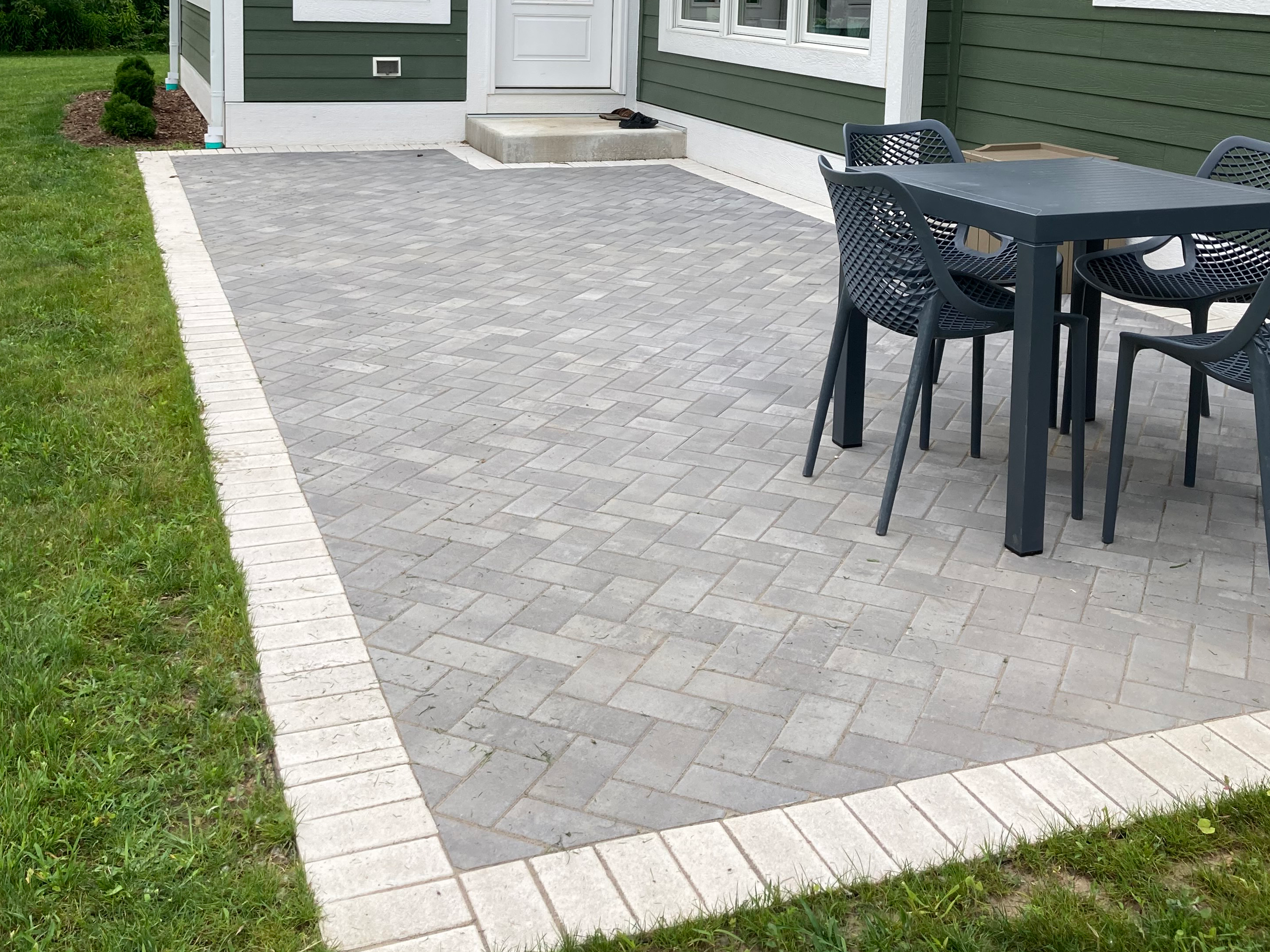
Planning a paver patio on a sloped yard in Wisconsin takes more than a good design. Our freeze-thaw climate, heavy spring rains, and clay soils can cause frost heave, erosion, and settling if the patio is not built right. This guide walks you through grading, drainage, and base construction that stand up to Wisconsin winters, so you can build it once and enjoy it for years.
Koch Kuts is a full-service landscaping and hardscaping company in Burlington, Wisconsin, with more than 25 years of experience across Southeast Wisconsin. From concept to completion, our team designs and installs paver patios, retaining walls, outdoor fireplaces, pool hardscapes, and more. If you are considering a paver patio on a sloped yard, we can help you plan, build, and maintain a patio that looks great and does not move when the weather does.
Why Sloped Yards in Wisconsin Need Extra Care
Sloped sites add beauty and dimension to a yard, but they also challenge patio construction. In Wisconsin, the ground freezes and thaws several times each winter. Water that gets trapped in the base or soil expands when it freezes, causing frost heave. When spring arrives, meltwater and rain run downhill and can wash out weak bases or joints. The right installation methods protect your investment.
- Freeze-thaw cycles cause expansion that lifts pavers if water is trapped.
- Clay soils common in Southeast Wisconsin drain slowly and hold water.
- Steep slopes increase runoff velocity and erosion risk.
- Downspouts and sump discharge lines can overload a patio area without proper routing.
Plan Your Paver Patio on a Sloped Yard
Define the Purpose and Layout
Start with how you will use the space. A dining area near the kitchen, a fire feature with seating, or a poolside lounge each need different sizes and shapes. Use stakes and string to outline the footprint, and plan logical transitions to doors, walkways, and the yard below.
Choose an Elevation Strategy
There are three common ways to tackle a paver patio on a sloped yard. Your choice depends on the slope, soil, and desired look.
- Cut and fill with walls: Cut into the slope uphill and use the excavated soil to build out the downhill side, held by a retaining wall. This creates a level terrace and a bold edge.
- Multi-level terraces: Break the slope into smaller, level platforms connected by steps. This reduces wall height and blends well with the landscape.
- Grade with a gentle fall: If the slope is mild, you can grade the base to a level patio but allow the surface a modest 1 to 2 percent cross slope for drainage.
Secure Permits and Call Before You Dig
Check local codes for retaining wall height limits, setbacks, and drainage rules. Before any excavation, call 811 to mark utilities. Koch Kuts handles permitting and utility locating for our projects to keep your build smooth and safe.
Drainage Essentials That Prevent Heave and Erosion
Good drainage is the backbone of a long-lasting paver patio on a sloped yard. Your goal is to control where water goes, move it away from the base, and keep it from gaining speed downhill.
Surface Drainage
- Pitch the patio surface 1 to 2 percent away from structures. That is about 1 to 2 inches of drop for every 10 feet.
- Use channel drains at door thresholds or tight spots. Tie drains to a safe daylight outlet or a dry well.
- Add a soldier course edge aligned with the fall to guide water off the surface without trapping it.
Subsurface Drainage
- Use an open graded base of angular, washed stone that allows water to move down and out.
- Install a perforated underdrain at the low side of the patio if soils are tight and water could collect. Wrap it in fabric, set it in clean stone, and pitch it to daylight.
- Route downspouts and sump lines away from the patio through solid pipe. Do not overload the patio base with roof runoff.
Site Runoff Management
- Build shallow swales to steer hillside runoff around, not across, the patio.
- Use erosion control blankets and silt barriers during construction to protect freshly graded slopes.
- Stabilize disturbed areas with seed and blanket or with decorative stone mulch to lock the soil in place.
Grading and Retaining Solutions for Sloped Yards
Grading sets the stage for everything that follows. For a paver patio on a sloped yard, you must plan the cut depth, wall height, and step transitions with precision.
Retaining Walls and Terraces
- Keep wall heights within code. Walls over certain heights may need engineered plans, drainage zones, and geogrid reinforcement.
- Include a drainage chimney behind the wall with clean stone and a weep outlet. This relieves pressure and directs water away from the patio.
- Build steps with consistent riser height and non-slip treads. Tie steps into the patio subbase for stability.
Safe Slopes and Transitions
- For areas next to the patio, maintain a stable finish grade. Turfed slopes should not exceed a practical mowing slope.
- Create a defined edge with a paver border and a secure edge restraint to prevent creep downhill.
- Blend the patio edge into surrounding grade with decorative rock or planting beds to slow runoff.
Build a Frost Resistant Base
The base is the difference between a patio that lasts a season and one that lasts decades. Wisconsin winters demand a base that drains, resists movement, and compacts tightly.
Choose the Right Base System
- Open graded base: A layered system of 2 to 3 inches of clear chip stone over 4 to 8 inches of 3/4 inch clean stone. It drains fast and resists frost heave because water has room to move.
- Dense graded base: Crushed stone with fines compacted in layers. It can work with perfect compaction and drainage, but is more prone to frost movement in clay soils.
- Permeable paver base: For patios designed to infiltrate, use a thicker open graded base with a larger stone reservoir and underdrain as needed.
Geotextile and Geogrid
- Place a woven geotextile fabric between subgrade soil and base stone to separate materials and prevent pumping in wet clay.
- Use geogrid in high or tiered walls to reinforce the soil and lock the system together. Follow manufacturer overlap and embedment rules.
Compaction and Lift Thickness
- Excavate to a uniform depth, then compact the subgrade until firm.
- Add base in 3 to 4 inch lifts. Compact each lift with a plate compactor until you achieve required density.
- Use a laser or string lines to verify elevations and consistent pitch during every step.
Step-by-Step Installation: Paver Patio on a Sloped Yard
- Site evaluation: Mark utilities, observe water flow during rain if possible, and take elevations.
- Design and layout: Choose the elevation plan, wall locations, steps, and drainage features. Select pavers and patterns suited to your style and maintenance goals.
- Excavation: Remove sod and soil to allow for base, bedding, and paver thickness. Cut deeper at wall locations and step footings as needed.
- Subgrade prep: Shape the subgrade with the target pitch. Compact until stable. Install geotextile over the subgrade.
- Base installation: Place open graded base stone in lifts. Compact thoroughly. Check elevations and slope. Install underdrain at the low side if required.
- Retaining wall and steps: Construct walls with proper leveling pads, drainage stone, and geogrid when specified. Build steps to code with consistent risers and secure foundations.
- Bedding layer: Screed 3/4 inch of clean chip stone or specialized high performance bedding material. Avoid using sand over open graded bases in freeze-prone areas.
- Lay pavers: Start from a straight reference line. Maintain joint spacing. Cut edges cleanly for a tight border. Integrate accent bands or soldier courses as designed.
- Edge restraint: Install a heavy duty edge restraint on compacted base stone, secured with spikes, to prevent lateral movement.
- Vibration and jointing: Compact the surface with a plate compactor fitted with a pad. Sweep polymeric sand into joints and compact again. Activate the sand per product instructions.
- Finishing: Set grates, finalize drain connections, and clean the surface. Backfill along edges and stabilize adjacent slopes with planting or stone mulch.
- Final check: Verify pitch, drain flow, and step safety. Review care instructions.
Common Mistakes to Avoid
- Insufficient base depth: Thin bases settle and heave. Adjust thickness to soil and load conditions, especially on slopes.
- Poor drainage planning: Skipping underdrains or surface pitch traps water and accelerates damage.
- Mixing materials: Using sand over an open graded base can migrate and create voids. Use compatible bedding materials.
- Neglecting edge restraint: Unsecured edges creep downhill over time, opening joints and causing movement.
- Ignoring downspouts: Directing roof water onto the patio or toward the base undermines stability.
- Rushing compaction: Thick lifts or dry stone reduce density. Compact in thin layers and check results.
Winter-Proof Maintenance Tips
A properly built paver patio on a sloped yard should require low maintenance, even in winter. A few simple steps keep it looking and performing its best.
- Use plastic or rubber tipped shovels to clear snow. Avoid metal blades that can scuff edges.
- Choose deicers labeled safe for concrete pavers. Avoid products that contain ammonium nitrates.
- Clear leaves and debris from drains and swales each fall so winter runoff can flow.
- Top up polymeric sand every few years if joints show loss. Keep joints full to block water and weed growth.
- Inspect edges and step treads each spring. Re-secure or adjust edge restraint if necessary.
Design Ideas That Work on Slopes
Slopes give you design options a flat yard cannot. Use them to your advantage with features that fit the grade and add function.
- Two-tier patio: A dining space on the upper level and a fire pit lounge on the lower level, tied by wide steps.
- Seat wall and lighting: A low wall on the high side of the patio doubles as seating and retains the grade. Add under-cap lights for safety.
- Permeable paver section: Install a permeable landing near steps or downspout outlets to absorb and slow water.
- Curved borders: Follow natural contours with sweeping borders and planting beds to soften grade changes.
- Integrated drainage art: Use decorative river rock channels that look like dry creek beds to guide water gently away.
Why Choose Koch Kuts for a Paver Patio on a Sloped Yard
Building a paver patio on a sloped yard in Wisconsin is not a weekend project. It requires careful planning, skilled excavation, and proven drainage and base systems. Koch Kuts brings decades of local experience, the right equipment, and a commitment to quality that shows in every project.
- Local expertise: We know Southeast Wisconsin soils, weather, and codes. Our patios are designed to stand up to freeze-thaw cycles.
- Full-service approach: Koch Kuts handles design, excavation, grading, retaining walls, patios, and finishing landscapes, along with snow removal and seasonal care.
- Premium materials: We use geotextiles, open graded bases, high performance bedding, and reliable edge systems that work together to resist frost heave.
- Custom solutions: From complex terraced patios to simple grade adjustments, every plan is tailored to your site and goals.
- Clear communication: Our team explains options, timelines, and maintenance so you know what to expect at every step.
Koch Kuts serves Burlington, Waterford, Mukwonago, Lake Geneva, Racine, and surrounding communities. Whether you need a new patio, retaining wall, shoreline restoration, or a premium driveway, our crews deliver lasting workmanship and friendly service.
Cost Factors and Timeline
Budget and schedule depend on slope, access, soil, and design complexity. A small level patio is faster and less costly than a multi-tier terrace with walls and steps. Include costs for drainage, underdrains, geogrid, and higher base volumes common on slopes. Most projects take a few days to a few weeks once permits and materials are ready. Koch Kuts provides transparent estimates and schedules so you can plan with confidence.
FAQs About Paver Patios on Sloped Yards
Can you build a patio on a steep hill?
Yes. We often terrace the hill into two or more levels with steps between them. This reduces wall heights, improves drainage control, and creates distinct outdoor rooms.
What slope should the patio surface have?
A 1 to 2 percent fall is standard. That is enough to move water without feeling slanted underfoot.
Will my patio move in winter?
With a well-draining open graded base, proper compaction, and edge restraint, movement is highly unlikely. Most winter issues come from trapped water or inadequate base thickness. Koch Kuts designs to prevent both.
Do I need a drain under the patio?
Many sloped yard patios benefit from an underdrain along the low edge, especially in clay soils or where runoff concentrates. We evaluate each site to decide.
How do I handle downspouts near the patio?
Route them through solid pipe past the patio and discharge at a safe area or dry well. Do not let roof water flow onto the patio or into the base.
Get It Right the First Time
A durable paver patio on a sloped yard balances beauty with engineering. When drainage, grading, and base construction work together, your patio will handle Wisconsin winters without shifting, sinking, or washing out. The key is planning and execution.
Koch Kuts has helped homeowners and businesses across Southeast Wisconsin turn challenging slopes into comfortable, long-lasting outdoor spaces. From lawn and grounds maintenance to complex hardscape builds, we take pride in quality and service. If you are ready to build a patio that lasts, we are ready to help.
Request a Free Estimate from Koch Kuts
Tell us about your paver patio on a sloped yard, and our team will evaluate your site, discuss options, and provide a clear plan and estimate. We serve Burlington, Waterford, Mukwonago, Lake Geneva, Racine, and nearby areas. Visit kochkuts.com to get started. Build it once. Enjoy it every season.


