
Yes, and here is how plants fight erosion
If you are noticing bare spots on a slope, muddy runoff after rain, or thin turf along a driveway or shoreline, you are likely dealing with erosion. The good news is that the right plants to help with erosion can slow water, hold soil in place, and rebuild healthy ground over time. Plants protect your yard in several ways. Roots weave through the soil and create a living net that resists being washed away. Leaves and stems break the force of raindrops so the surface is less likely to detach and travel downhill. Dense plantings trap sediment and slow flowing water, which gives it time to soak in. As plants grow and shed leaves, they add organic matter that makes soil sponge-like and able to absorb more rain. When paired with smart grading and, when needed, hardscaping, plants can be a powerful, natural solution for most erosion problems.
Koch Kuts has been helping homeowners and businesses in Southeast Wisconsin stabilize slopes, protect shorelines, and restore healthy lawns for more than 25 years. If you want a long-lasting fix that looks great, our team can design, install, and maintain the ideal mix of plants to help with erosion for your site.
The best plants to help with erosion in Southeast Wisconsin
Groundcovers that lock in soil
Groundcovers spread across the surface, cover bare soil fast, and form a dense root mat. They are some of the most effective plants to help with erosion on gentle to moderate slopes.
- Bearberry (Arctostaphylos uva-ursi): Evergreen, thrives in sandy or lean soils, full sun, perfect for banks and lakeside edges.
- Creeping juniper (Juniperus horizontalis): Low, woody evergreen that hugs the ground, handles salt and sun, ideal near driveways.
- Pachysandra (Pachysandra terminalis): Good for shade, fills in under trees where turf struggles.
- Periwinkle or vinca (Vinca minor): Evergreen leaves, purple spring flowers, for part shade to shade.
- Wild ginger (Asarum canadense): Native shade groundcover that builds rich, stable soil in woodland edges.
- Prairie dropseed (Sporobolus heterolepis): Fine-textured clumps that slowly knit together, great on sunny slopes.
- Sedges (Carex spp.): Many native options for sun or shade, dry slopes or wet spots near downspouts.
Native grasses and sedges that knit slopes together
Deep, fibrous roots from grasses and sedges hold soil and increase infiltration. These are standout plants to help with erosion in our region.
- Little bluestem (Schizachyrium scoparium): Strong clumps, copper fall color, excellent on dry, sunny banks.
- Switchgrass (Panicum virgatum): Upright, tall grass with deep roots for larger slopes and low areas.
- Blue grama (Bouteloua gracilis): Low maintenance, sun loving, works with gravelly or sandy soils.
- Fox sedge (Carex vulpinoidea) and tussock sedge (Carex stricta): Thrive in wetter ground, great for swales and shoreline edges.
- Junegrass (Koeleria macrantha): Drought tolerant, pairs well with wildflowers for sunny slopes.
Flowering perennials for beauty and support
Perennials add color and seasonal interest while their roots stabilize soil. Mix them with grasses and groundcovers for a layered planting.
- Black-eyed Susan (Rudbeckia hirta): Fast to establish, bright summer blooms, good for sunny banks.
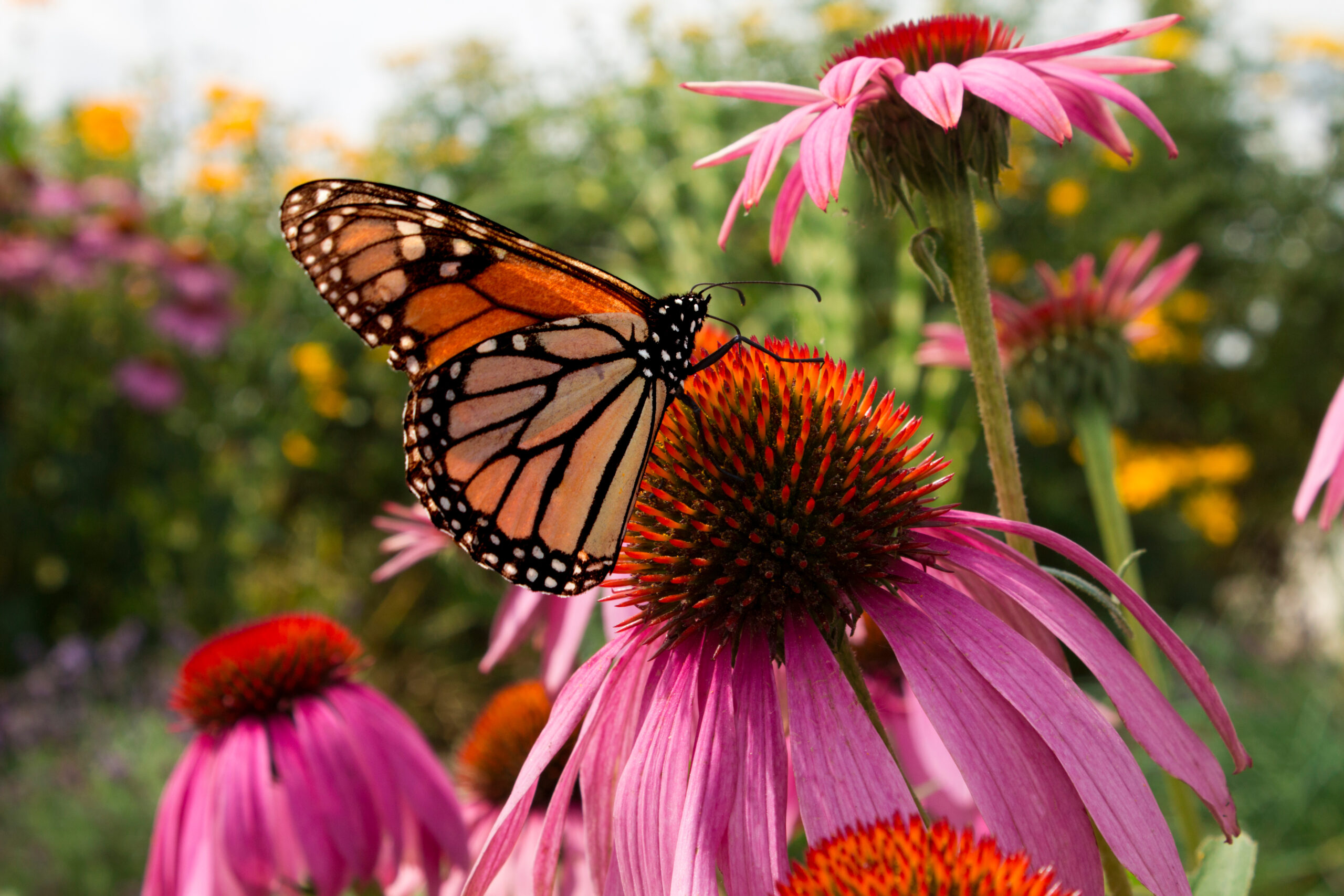
- Purple coneflower (Echinacea purpurea): Strong taproot and sturdy stems that handle heavy rain and wind.
- Bee balm (Monarda didyma): Fills space quickly, attracts pollinators, likes moisture.
- Wild bergamot (Monarda fistulosa): Drought tolerant option for sunnier, drier slopes.
- Butterfly weed (Asclepias tuberosa): Deep rooted, thrives in poor soil, adds vivid orange color.
- Golden alexanders (Zizia aurea): Early-season bloom that helps stabilize spring soils.
Shrubs that anchor banks and shorelines
Woody shrubs send out strong, branching roots that hold larger volumes of soil. They are key plants to help with erosion along slopes and water.
- Red osier dogwood (Cornus sericea): Loves moist soil, roots well from stems, ideal for streambanks and shorelines.
- Ninebark (Physocarpus opulifolius): Tough and adaptable, handles clay and sun, great for stabilizing larger slopes.
- Serviceberry (Amelanchier alnifolia): Multi-stem beauty with strong roots and four-season interest.
- American hazelnut (Corylus americana): Dense thicket-forming shrub that grips soil on mid-slopes.
- Potentilla (Dasiphora fruticosa): Low, sun-loving shrub that tolerates poor soils.
- Buttonbush (Cephalanthus occidentalis): Excellent for wet spots and shorelines, hosts pollinators.
Trees that stabilize wet and dry slopes
Trees add deep anchoring roots and canopy cover that softens rainfall. Choose species that match your soil moisture and space.
- River birch (Betula nigra): Great near water and in heavy soils prone to wet conditions.
- Willows (Salix spp.): Rapid root growth that locks shorelines and creek edges in place.
- Bur oak (Quercus macrocarpa): Deep rooting for dry upland slopes, long-lived and resilient.
- Hackberry (Celtis occidentalis): Urban tough, handles wind, clay, and slope exposure.
What to plant where: match plants to your site
Sunny, dry slopes
Focus on drought-tough species that hold fast without constant watering.
- Little bluestem, prairie dropseed, blue grama
- Butterfly weed, purple coneflower, black-eyed Susan
- Creeping juniper and ninebark for woody structure
Shady banks and under trees
Shade-tolerant plants to help with erosion will protect roots and reduce washouts where turf fails.
- Wild ginger, pachysandra, periwinkle
- Sedges like Carex pensylvanica for dry shade
- Serviceberry and oakleaf hydrangea for shrub layers
Heavy clay
Clay needs roots that split soil and build structure. Avoid constant tilling, which breaks down aggregates.
- Ninebark, serviceberry, switchgrass
- Black-eyed Susan and bee balm with compost-amended planting holes
Sandy or gravelly soils
Look for tough natives that thrive with fast drainage and lower nutrients.
- Bearberry, prairie dropseed, little bluestem
- Potentilla and creeping juniper
Near water and shorelines
Use moisture-loving species that can handle periodic flooding or wave action. Pair with stone where needed.
- Red osier dogwood, buttonbush, willows
- Fox sedge, tussock sedge, switchgrass
- River birch for canopy and added stability
How to install erosion control plantings
A strong plan and careful installation help your plants work right away. Here is a simple process Koch Kuts follows to create reliable, attractive results.
- Assess the slope, water flow, and soil. Note where water enters and exits, any bare channels, and sun exposure. Test or observe soil type and drainage.
- Fine-tune the grade. Gentle grading spreads water and removes ruts. On steeper slopes, plan terracing or a retaining wall for safety and stability.
- Amend selectively. Add compost to planting holes or thin layers across the area to improve infiltration. Do not over-till, which can loosen soil too much.
- Install erosion control fabric where needed. Biodegradable blankets or netting hold soil while roots establish. Secure with staples and overlap seams.
- Lay out plants in groups. Stagger spacing like shingles so bare soil is covered quickly. Combine groundcovers, grasses, perennials, and shrubs for layered protection.
- Plant correctly. Set plants at the same depth as their containers, backfill gently, and firm the soil around roots. Water each plant in well.
- Mulch smart. Apply 2 to 3 inches of shredded hardwood mulch between plants. Keep mulch off stems. On slopes, pin jute netting over mulch to prevent slipping.
- Create safe water paths. Add rock-lined swales, dry creek beds, or rain gardens to catch and slow runoff. Direct downspouts to planted areas, not bare soil.
- Protect while establishing. Use temporary fencing, deer repellents, or netting if wildlife pressure is high. Water regularly during the first growing season.
- Monitor and adjust. Fill any small gullies early, add plants to thin spots, and top up mulch until the planting knits together.
Maintenance tips that keep plants working
Plant-based erosion control improves each year if you give it basic care. These simple tasks protect your investment and reduce future maintenance.
- Water deeply during the first year, then only during drought. Deep, infrequent watering encourages stronger roots.
- Weed monthly in the first season. Remove weeds before they seed to prevent competition.
- Refresh mulch annually until full coverage. After plants fill in, reduce mulch and let foliage act as a living cover.
- Cut back perennials and grasses in late winter or early spring. Leave stems and seed heads over winter for wildlife and added soil protection.
- Prune shrubs for structure, not sheared balls. Keep lower branches where possible to shield soil.
- Avoid plastic sheeting. It sheds water, starves roots of oxygen, and can worsen erosion.
Plants vs hardscaping: when you need more than roots
Plants to help with erosion solve many problems, but very steep grades, active gullies, or heavy water flow may call for a blended approach. Hardscaping elements can stabilize the site fast while plants grow in. Koch Kuts designs integrated solutions that look natural and last.
- Retaining walls and terraces: Create level planting pockets, reduce slope angle, and slow runoff. We build with stone or engineered block for strength and style.
- Dry creek beds and swales: Direct and slow water using rock and well-graded channels, then plant edges with deep-rooted natives.
- Paver edging and permeable patios: Capture and infiltrate rain near living landscapes, reduce sheet flow, and add outdoor living space.
- Shoreline restoration: Combine native shrubs and sedges with strategic rock armoring to reduce wave damage and rebuild banks.
- Drainage improvements: Regrade problem spots, add French drains or catch basins, and route water to rain gardens.
Real-world results with Koch Kuts
A lakeside homeowner near Lake Geneva faced constant washouts and muddy water moving toward the shoreline. Koch Kuts reshaped the slope into gentle terraces, installed a dry creek to handle roof runoff, and added a mix of switchgrass, fox sedge, red osier dogwood, and river birch. A biodegradable blanket held the soil for the first season. By the next summer, roots had locked in the bank, water flowed cleanly through the creek bed, and the planting looked lush without constant maintenance.
On a sunny, sandy hillside in Burlington, patchy turf gave way each spring. Our team replaced the lawn with drought-tough plantings, including prairie dropseed, little bluestem, butterfly weed, and creeping juniper. The new layout cut mowing, controlled erosion, and added four-season texture and color.
Frequently asked questions about plants to help with erosion
How long do plants take to control erosion?
You will see improvement right away when you pair plantings with mulch or erosion blankets. Most groundcovers and grasses start holding soil in a few weeks. Full stabilization usually takes one to three growing seasons, depending on plant size, spacing, and site conditions.
Will groundcovers invade my lawn?
Choose the right species and create clear edges. Many effective groundcovers stay where planted if you use edging, mow border strips, or install paver or stone borders. Koch Kuts can design clean transitions that look sharp and keep plants in bounds.
Is fall or spring better for planting?
Both work well in Southeast Wisconsin. Spring gives a longer growing season, while fall offers cool weather and regular rain that helps roots take hold. Avoid planting right before extreme heat or a heavy storm.
Do I still need mulch?
Yes at first. Mulch protects bare soil while plants spread. Over time, the plants become the mulch as their foliage covers the ground and their leaves add organic matter.
Are native plants better for erosion control?
Native plants are often the best choice because their deep roots and regional adaptability make them reliable and low maintenance. Many of the strongest plants to help with erosion in our area are Wisconsin natives.
Can I seed instead of using plants?
Seeding is affordable and works well for larger areas if you use erosion control blankets and proper watering. Combining seed mixes with plugs or small potted plants speeds coverage and improves early performance.
Work with Koch Kuts for a lasting solution
Stopping erosion is about more than planting a few shrubs. It takes the right mix of species, smart grading, and sometimes well-placed hardscaping to guide water and protect soil. Koch Kuts brings over 25 years of experience in landscaping, hardscaping, excavation, and grading to deliver complete, customized solutions. We install plants to help with erosion that fit your soil, sun, and style. We also build retaining walls, paver patios, outdoor fireplaces, premium driveways, and shoreline restorations that work together to strengthen your property.
We proudly serve Burlington, Waterford, Mukwonago, Lake Geneva, Racine, and surrounding communities. If you want a yard that looks great and stands up to Wisconsin weather, we are ready to help. Visit kochkuts.com to learn more or request a free estimate. Let Koch Kuts design and install a landscape that stops soil from washing away and adds lasting beauty to your home or business.


