
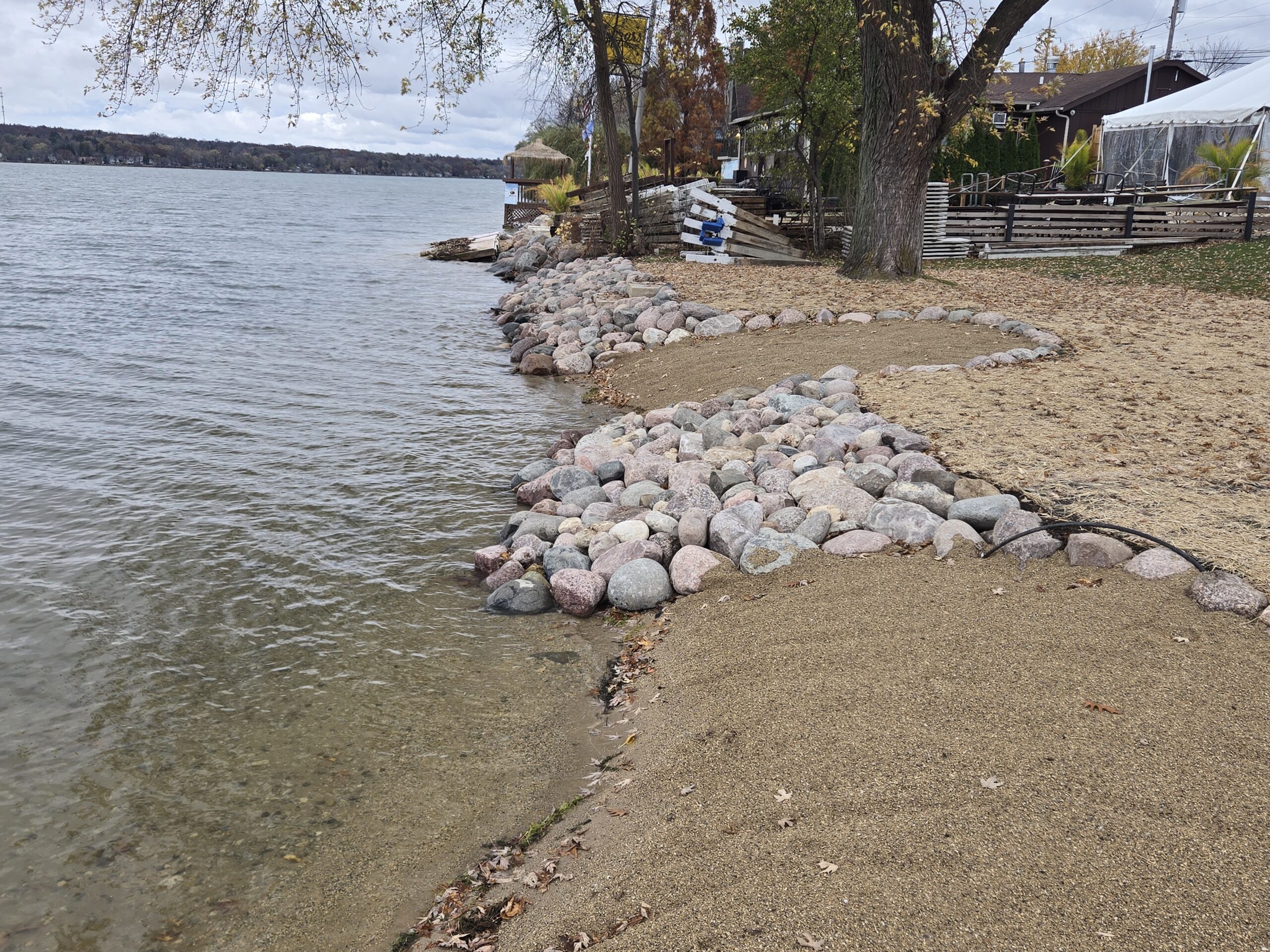
Shoreline Restoration Can Save Your Yard and Your Peace of Mind
Is your lake or pond creeping closer to your lawn with every storm or boat wake? Shoreline restoration can save your eroding yard. Learn proven fixes to stop wave damage, protect property value, and revive habitat. Act now and get expert tips today. If you live in Southeast Wisconsin, Koch Kuts is ready to help you stabilize, beautify, and protect your waterfront for the long term.
Why Shorelines Erode in Southeast Wisconsin
Waterfront landscapes in Burlington, Waterford, Mukwonago, Lake Geneva, and Racine face unique pressures. Wave action from natural winds and boat traffic, seasonal ice movement, high water levels, and steep or sandy banks all speed up erosion. Clay soils become slick and unstable when saturated. Poor drainage above the shoreline sends extra runoff toward the water, which undercuts the bank. Over time, the water steals inches of land and can create safety hazards. Shoreline restoration addresses the root causes so your property stays intact and your views stay beautiful.
Early Warning Signs Your Shoreline Needs Help
- Grass along the waterline dying or slumping
- Exposed roots from trees, shrubs, or shoreline grasses
- Fresh soil deposits or muddy water after storms
- Small collapses or sink spots near the edge
- Rock or old timber barriers tipping or sliding
- New cracks in patios, paths, or retaining walls close to the shore
- Loss of sandy beach or sediment washing away
Why You Should Act Now
Erosion rarely slows down on its own. Waiting often leads to bigger damage and higher repair costs. Fast action with the right shoreline restoration plan can protect patios, walkways, docks, and nearby structures. You also safeguard your lawn, keep trees healthy, and prevent hazards for kids and pets. On many Wisconsin lakes, controlling erosion is required to prevent sediment from harming water quality. A proactive plan supports native habitat for fish, turtles, and birds while locking your soil in place.
Proven Shoreline Restoration Methods That Work
Naturalized Buffers and Native Plantings
One of the most effective solutions is a natural buffer of deep-rooted native plants. These plants knit soil together and absorb runoff before it reaches the lake. A buffer can be formal and neat or more natural, depending on your style. With careful design, it enhances views instead of blocking them. For Wisconsin properties, a mix of grasses, sedges, flowers, and low shrubs provides year-round protection and a fresh look each season. Koch Kuts designs buffers that fit your landscape and lake rules and can blend them seamlessly with lawns and hardscapes.
- Roots hold soil in place and resist washouts
- Vegetation filters nutrients and keeps water clear
- Buffers deter geese that prefer short turf
- Seasonal color boosts curb appeal and property value
Riprap and Stone Armoring Done Right
Riprap is a layer of properly sized rock placed along the shoreline to break up wave energy and shield the bank. When installed with care, it looks natural and lasts for decades. The key is a stable base, a filter fabric or graded gravel layer under the rock, and toe protection at the waterline so waves do not scoop out the base. In Southeast Wisconsin, ice and wake boats create powerful forces, so stone sizing matters. Koch Kuts selects rock sizes and shapes based on your site so the stone interlocks and resists movement. The result is a clean, stable edge that prevents soil loss.
Bioengineering Solutions Like Coir Logs and Live Staking
Bioengineering blends natural materials with living plants for a strong, eco-friendly shoreline. Coir logs made from coconut fiber provide a temporary barrier that softens waves and traps sediment. Live stakes from willow or dogwood are driven into the bank to take root and hold the soil. Over time, the living plants take over the job of the coir log. This approach is ideal for low to moderate energy shorelines. Koch Kuts integrates bioengineering with stone or plantings for a layered defense that looks natural.
Terracing and Retaining Walls for Steep Banks
Steep banks are prone to slides and washouts. Terracing breaks a steep slope into flat steps that slow water, catch sediment, and give plants room to thrive. Where structure is needed, segmental retaining walls add stability and style. As a hardscaping expert, Koch Kuts designs walls that support soil and look polished next to patios, paths, and outdoor living spaces. Thoughtful grading above the wall ensures rainwater flows where it should and not toward the edge.
Seawalls and When to Consider Them
Seawalls create a rigid barrier against waves. They can be useful on some high energy sites, but they are not the first choice in many lakes because they reflect energy and can worsen erosion on neighboring properties. They also need careful design to handle ice pressure. If a seawall is the right fit, Koch Kuts will discuss materials, drainage behind the wall, and a transition to adjacent properties to control side wash. In many cases, a mixed approach with stone and plantings delivers better long term results.
Beach Nourishment and Sand Replacement
If your sandy beach is shrinking, targeted sand replenishment may help restore it. This is not a one time fix and often works best when paired with riprap, coir logs, or planting to hold the new sand in place. Each lake has rules about sand placement, and permits may be required. Koch Kuts can advise you on the best method to rebuild a stable, low maintenance beach that suits your use and local regulations.
Drainage and Runoff Control
Many shoreline problems start uphill. Downspouts that empty near the bank, compacted soil, and sloped lawns send water rushing to the edge. Upgrading drainage is a powerful part of shoreline restoration. Solutions may include dry creek beds, rain gardens, permeable pavers, small swales, or strategic grading. Koch Kuts specializes in both landscaping and hardscaping, so we can create a system that looks great and moves water safely away from the shoreline.
Winter and Wake Protection Strategies
Ice heave is a big factor in Wisconsin. As ice expands and shifts, it pushes against the shore and can move rock, logs, and loose soil. Proper toe-in of riprap, gradual slopes, and flexible plantings help absorb this pressure. If wake boats are common on your lake, extra stone size and slope adjustments will reduce wave impact. Koch Kuts designs with local conditions in mind so your shoreline holds through winter and busy summer weekends.
Shoreline Restoration Cost Factors
Every site is unique, so costs vary. The main factors include shoreline length, slope and soil type, level of wave and ice exposure, access for equipment, chosen materials, and needed drainage upgrades. In general, combining plantings with stone protection offers strong value and long lifespan. Investing early can be less expensive than repairing major slides or rebuilding structures near the edge. Koch Kuts provides clear estimates and phased options so you can plan with confidence.
The Koch Kuts Approach to Lasting Results
Koch Kuts is a full service landscaping and hardscaping company based in Burlington, Wisconsin, with more than 25 years of experience. We serve homeowners and businesses across Southeast Wisconsin with custom shoreline restoration, paver patios, retaining walls, outdoor fireplaces, land grading, driveways, and seasonal lawn care. Our team focuses on craftsmanship, code compliance, and communication from start to finish.
- Site assessment and goals. We walk the property, review water levels and wave patterns, and learn how you use your shoreline.
- Design and materials. We present tailored options, from native buffers and bioengineering to riprap and hardscaping.
- Permitting guidance. We help you navigate Wisconsin rules and local approvals to keep the project on track.
- Construction. Our crews install drainage, grading, and shoreline protection with attention to detail and safety.
- Planting and finishing. We add native plants, mulch, and final touches that enhance beauty and function.
- Care plan. We provide maintenance tips and seasonal checks so your investment keeps working year after year.
Timeline and What to Expect
Most shoreline restoration projects take a few weeks from design approval through construction, depending on scope and permitting. Spring and early summer are popular for planting, though stone work can be scheduled in other seasons as conditions allow. Koch Kuts coordinates delivery, staging, and erosion control so work moves smoothly and the site stays neat.
DIY or Professional Help?
Some small fixes are great for motivated homeowners, like planting a native buffer, redirecting a downspout, or maintaining a narrow footpath that avoids trampling the bank. However, if you see slumping soil, undercutting, steep slopes, or heavy wave action, professional help is the safer choice. Proper base prep, soil lifts, filter materials, and stone sizing are critical to success. Koch Kuts brings the right equipment, experience, and permit knowledge to complete the job without costly mistakes.
- DIY friendly tasks: light planting, mulch, minor drainage adjustments
- Call a pro: structural walls, large riprap installs, steep slopes, heavy wake zones, permitting needs
Permits and Regulations in Wisconsin
Wisconsin regulates work near the water to protect shorelines and water quality. Many common shoreline restoration methods fall under general permits when they meet size and location standards. Projects that change the lakebed, place material below the ordinary high water mark, or alter wetlands may need specific approvals. Local municipalities and lake districts may also have rules about buffers, setbacks, and materials. Koch Kuts helps you understand these requirements and designs solutions that fit both your goals and the rules for your lake or river.
Frequently Asked Questions About Shoreline Restoration
Will I lose part of my lawn to a buffer?
A buffer can be sized to your space and style. Many homeowners choose a narrow, attractive strip that stabilizes the edge without taking over the yard. Smart plant selection keeps views open while providing strong root structure.
How long does riprap last?
When installed correctly with the right base, filter layer, and stone size, riprap can last decades. Routine checks after big storms and ice-out help catch small issues early.
Can I plant and still keep a beach?
Yes. Many designs include a planted buffer on one side and a defined beach area on the other, with subtle transitions that prevent sand from washing away. Each lake has rules, so planning is important.
What size rock do I need?
Stone size depends on wave and ice energy, slope, and water depth. Larger rock is used where wakes and ice are stronger. A site visit helps determine the best size mix for stability and a natural look.
When is the best time to start?
Spring through early fall is ideal for planting. Stone work and grading can be planned most of the year based on site access and weather. Early planning helps with permits and scheduling.
Can shorelines be both beautiful and durable?
Absolutely. The most successful shoreline restoration blends strength, function, and style. Stone, native plants, and careful grading create a shoreline that looks great, holds up to weather, and supports wildlife.
Real Results for Local Waterfronts
On a Burlington lakefront with frequent wake traffic, Koch Kuts replaced failing timbers with properly sized riprap, added a small drainage swale above the bank, and planted a low native buffer. The shoreline held firm through the next ice season and summer boating, and the property owner gained a cleaner view and fewer muddy spots. In Waterford, a steep bank was terraced with a segmental wall and live staking. The yard is now safer, and stormwater no longer cuts channels through the slope. On a Mukwonago pond, coir logs and sedges stabilized a soft shore, which now supports frogs, dragonflies, and clear water after storms. Each site needed a different plan, and each one benefited from a balanced approach.
Protect Property Value and Enjoy Your Waterfront Again
Stable shorelines look better, function better, and hold value. With the right shoreline restoration, you can stop soil loss, reduce maintenance, and enjoy a safer, cleaner waterfront. Whether you want a neat stone edge, a natural habitat feel, or a refined outdoor living space near the water, Koch Kuts will tailor a solution that fits your goals and budget.
Why Homeowners and Businesses Choose Koch Kuts
With over 25 years serving Southeast Wisconsin, Koch Kuts has the experience to deliver projects that last. Our team combines landscaping and hardscaping expertise, which means we can solve the whole puzzle from shore protection to patios, walkways, and grading. We work cleanly, communicate clearly, and stand behind our workmanship. Our service areas include Burlington, Waterford, Mukwonago, Lake Geneva, Racine, and more.
Take the First Step Today
Do not let your shoreline slip away. Schedule a consultation with Koch Kuts to discuss a custom shoreline restoration plan for your property. Learn what is causing the erosion, compare proven solutions, and get a clear estimate. Visit kochkuts.com to request a free estimate and get started. Your yard, your view, and your peace of mind are worth protecting.


