
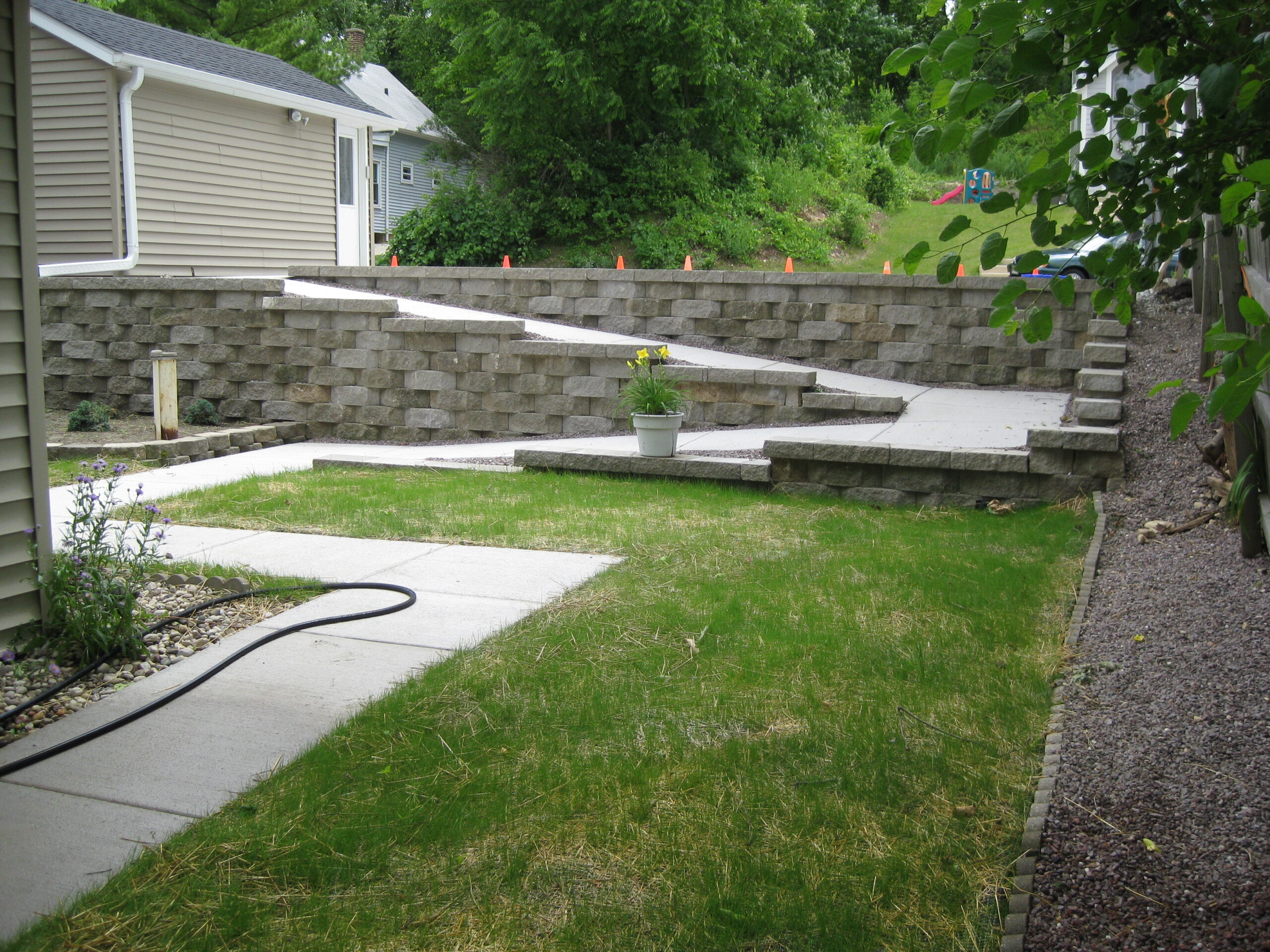
The uphill battle with sloped yard problems
If you live on a hill or your lot has a grade change, you already know sloped yard problems can be frustrating. Grass thins out, water rushes where it should not, and mowing feels like a workout. On top of that, every season brings a new challenge, from spring washouts to winter ice. The good news is that most of these issues have practical, lasting solutions. With smart planning, the right materials, and professional installation, even a steep hillside can look beautiful and function well.
Koch Kuts has helped homeowners and businesses in Burlington, Wisconsin and across Southeast Wisconsin solve slope issues for more than 25 years. As a full-service landscaping, hardscaping, and excavation company, we combine grading, drainage, and design expertise to create outdoor spaces that stand up to our local climate and boost curb appeal.
Why sloped yards are tough to maintain
Mowing and maintenance hazards
Steep lawns are hard to mow safely. The steeper the slope, the higher the risk of slips, scalping the turf, and uneven cuts. Pushing or riding a mower across a hill also compacts the soil, which reduces air and water circulation. Over time, that compaction leads to weak grass and bare patches. Trimming edges and clearing debris often takes longer on a slope, and the results can still look patchy.
Water runoff and erosion
Water is the number one driver of sloped yard problems. On a hill, rainfall and snowmelt move faster, picking up soil and nutrients as they flow down. That creates ruts, gullying, exposed roots, and sediment buildup at the bottom of the slope. Topsoil loss makes it even harder for grass and plants to thrive, and mulch washes away after every storm. In heavy rains, runoff can overwhelm gutters, flood low areas, and send water toward your foundation.
Soil quality and compaction
Many sloped properties in Southeast Wisconsin sit on heavy clay subsoils. Clay compacts easily and drains slowly, which means water either runs off too fast at the surface or puddles in lower areas. Both situations stress turf and plants. Without intervention like aeration, organic matter, or terracing, the soil structure on a slope tends to get worse over time.
Plant stress and microclimates
Plants on a hill often struggle because slopes create microclimates. Upper areas may dry out quickly due to wind and full sun. Lower areas can stay cool and wet. That mismatch means the same plants will not perform equally across the grade. Many standard lawn grasses do not root deeply enough to anchor a slope, and shallow roots are the first to lift when water moves downhill.
Drainage and foundation risks
Fast-moving water looks for the easiest path. If that path leads to a driveway, sidewalk, or the side of your home, it can cause cracking, frost heave, or basement moisture. Poor downspout placement makes these sloped yard problems worse. If you see water pooling at the bottom of a hill or flowing toward structures, it is time to rethink your drainage plan.
Winter challenges in Southeast Wisconsin
Freeze and thaw cycles create heaving, shifting, and cracking. Ice forms on sloped walks and drives, which is a safety issue. Melting snow funnels water downhill, where it can refreeze and block drains. Salt can damage grass and plants near paths. All of this makes winter one of the hardest seasons for a yard on a slope.
Accessibility and everyday use
Even if you can keep the grass healthy, sloped yards are less usable. It is harder to place furniture, play sports, or entertain. Kids and pets slip more easily. Without steps, landings, or level areas, the yard does not support everyday activities or gatherings.
How to spot sloped yard problems early
Before you invest in fixes, take stock of how water moves and how the slope behaves during different seasons. Look for these signs:
- Bare or thin grass on the slope or at the top edge
- Ruts, channels, or washouts after rain
- Sediment or mulch piled at the bottom of the hill
- Puddles near patios, driveways, or the foundation
- Moss or algae in shady, damp sections
- Leaning fence posts or shifting paver edges
- Exposed roots or unstable steps
- Ice sheets forming on paths in winter
Practical fixes that work on hillsides
Start with grading and drainage
Good drainage is the foundation for any slope solution. Koch Kuts evaluates how water moves on your site and designs a plan to control it. Typical tools include:
- Regrading to shape the slope and direct runoff to safe areas
- Swales that gently channel water across the contour instead of straight downhill
- French drains to capture subsurface water and move it away
- Downspout extensions and catch basins to manage roof runoff
- Dry wells or infiltration trenches where soil allows
- Rain gardens at the base of a slope to slow, filter, and absorb water
Thoughtful grading also protects your home and hardscape from water intrusion and frost damage.
Stabilize the slope for the long term
Once water is under control, stabilize the soil so it stays put. Depending on slope steepness and soil type, consider:
- Retaining walls designed to hold back soil and create flat terraces
- Terracing with low walls or boulder outcrops to reduce the length of uninterrupted slope
- Erosion control blankets or turf reinforcement mats during establishment
- Deep-rooted ground covers and shrubs that knit the soil together
- Mulch or stone in select areas to reduce splash erosion and maintenance
Koch Kuts builds engineered retaining walls and terraces with proper base preparation, drainage, and backfill. That means better stability, better looks, and far fewer headaches over time.
Create safe, usable spaces
Turning a steep yard into a place you enjoy starts with level areas and safe access. Options include:
- Paver patios nested into the hillside to create a level living space
- Stone or paver steps with even risers and solid landings for safe walking
- Switchback pathways to make elevation changes comfortable
- Handrails where needed for safety
- Low-voltage lighting to guide steps and paths at night
Koch Kuts designs and installs paver patios, steps, and outdoor features that complement your home and fit the terrain. The goal is to make your yard more functional without fighting the natural grade.
Choose plants that hold the slope
Plant selection can make or break a hillside. Deep roots and dense growth protect the soil and stay attractive between maintenance visits. For Southeast Wisconsin, consider:
- Native grasses like little bluestem and switchgrass that root deeply and handle drought
- Ground covers such as creeping juniper or bearberry for sunny slopes
- Shade tough options like pachysandra or wild ginger under trees
- Spreading shrubs like cotoneaster, gro-low sumac, or snowberry for erosion control
- Small trees such as serviceberry to add structure without casting heavy shade
Koch Kuts can create planting plans that match sun, soil, and slope conditions. We often combine plants with mulch or stone to reduce washout while roots establish.
Smarter watering for slopes
Water applied too fast will run downhill before it soaks in. Use methods that slow and target moisture:
- Drip irrigation that delivers water right to the root zone
- Cycle and soak sprinkler programming to prevent runoff
- Moisture and rain sensors to adjust watering automatically
- Mulch to reduce evaporation and protect soil during storms
Proper watering protects your investment in plants and turf and helps prevent new erosion.
Maintenance that keeps hillsides healthy
Routine care goes a long way on slopes. Try these habits:
- Mow across the slope, not up and down, and avoid mowing when wet
- Keep mower blades sharp to reduce tearing and stress on grass
- Core aerate compacted areas to improve oxygen and water flow
- Overseed with deep-rooted turf blends suited to your sun and soil
- Topdress with compost to build soil structure
- Refresh mulch each season and replace washed-out areas quickly
- Clear leaves and debris before winter to prevent slick spots and mold
Koch Kuts offers lawn and grounds maintenance, seasonal care, and snow removal to keep your hillside safe and looking good year round.
When to bring in a pro
Situations that need expert help
Some sloped yard problems call for professional design and equipment. Get help when you see:
- Slopes steeper than you can mow safely
- Cracks or bulges in existing walls
- Water flowing toward your home or garage
- Severe erosion or landslide risk
- Sinkholes, soft spots, or settling
- Drainage that crosses property lines or affects neighbors
These situations benefit from grading expertise, engineered walls, and reliable drainage systems that last.
How Koch Kuts solves sloped yard problems
As a Burlington based company, Koch Kuts understands the soils, slopes, and weather patterns of Southeast Wisconsin. Our team combines landscaping, hardscaping, and excavation to solve slope issues from the ground up. We handle grading and drainage, build retaining walls and terraces, install paver patios and steps, and select plantings that stabilize the hill. We also offer shoreline restoration for waterfront properties with erosion concerns. With over 25 years of experience serving Burlington, Waterford, Mukwonago, Lake Geneva, Racine, and surrounding areas, we deliver durable results and friendly service. If you need a slope transformed, Koch Kuts is ready to help.
Project ideas for sloped yards in Southeast Wisconsin
- Tiered garden with low retaining walls, native grasses, and a central paver patio
- Hillside steps with landings, accent boulders, and low-voltage path lighting
- Rain garden at the base of the slope to catch roof and lawn runoff
- Switchback path that connects a driveway to a backyard deck with safe grades
- Pool hardscape carved into the hill with sitting walls and planting beds
- Shoreline restoration that stabilizes banks and improves water quality
Step by step plan to start fixing your slope
- Observe water flow during a rain and note trouble spots. Take photos for reference.
- Check soil by digging a few small holes. Look for dense clay, poor drainage, or thin topsoil.
- List your goals. Do you want a patio, easier mowing, less erosion, or better curb appeal?
- Address drainage first. Plan where water should go and how to slow it down.
- Stabilize the slope with terraces, walls, or plantings as needed.
- Create access with steps and safe pathways.
- Install irrigation or adjust your watering schedule to match the new layout.
- Finish with erosion control mats, mulch, and deep-rooted plants.
- Set a simple maintenance schedule for mowing, aeration, and seasonal care.
- Review after the first big storm and make small adjustments.
Common mistakes to avoid
- Planting shallow-rooted turf on a steep slope without erosion control
- Relying on mulch alone where water rushes downhill
- Pointing downspouts toward the slope or near foundations
- Building walls without proper base, drainage, and backfill
- Skipping compaction in base layers for patios and steps
- Overwatering with sprinklers that run off before soaking in
- Ignoring seasonal changes like freeze thaw cycles and snowmelt
FAQs about sloped yard problems
Do I need a retaining wall?
Not always. Gentle slopes can often be stabilized with grading, plants, and erosion control fabrics. Steeper grades or areas where you want a level patio or lawn usually benefit from a properly engineered wall. Koch Kuts can evaluate your site and recommend the least invasive solution that will last.
Can I build a patio on a hill?
Yes. The key is excavation, solid base preparation, and reliable drainage. A patio can be cut into the slope or built on a terrace with a retaining wall. Paver patios perform well because individual units allow for slight movement without cracking like concrete. Koch Kuts designs patios that fit your yard and your lifestyle.
How do I keep mulch from washing away?
Use shredded hardwood mulch on mild slopes, and combine it with plants and edging. On steeper areas, switch to stone mulch or install erosion control blankets until plants root in. Adjust downspouts and add swales to slow water before it reaches mulched beds.
What plants hold soil best?
Deep-rooted natives and spreading shrubs are great choices. Little bluestem, switchgrass, creeping juniper, cotoneaster, and gro-low sumac all perform well in Southeast Wisconsin. The best mix depends on your sun, soil, and slope angle. Koch Kuts can create a planting plan tailored to your site.
How much maintenance will I need?
With good drainage, smart plant choices, and sturdy hardscapes, maintenance is very manageable. Expect seasonal tasks like mulching, pruning, aeration, and small touch ups after big storms. Koch Kuts offers maintenance plans if you prefer professional care.
What if my slope affects a neighbor or a street?
Shared drainage calls for careful grading and possibly permitting. A professional plan helps avoid conflicts and keeps water where it belongs. Koch Kuts can design solutions that follow local guidelines and protect surrounding properties.
Why choose Koch Kuts for slope solutions
Koch Kuts brings together landscaping, hardscaping, and excavation to tackle sloped yard problems from every angle. We provide grading and drainage, paver patios, retaining walls, outdoor fireplaces, pool hardscapes, shoreline restoration, and ongoing maintenance. With more than 25 years serving Burlington, Waterford, Mukwonago, Lake Geneva, Racine, and nearby communities, we are committed to quality workmanship and dependable service. Our goal is simple. Build outdoor spaces that look great, function well, and last in Wisconsin weather.
Ready to transform your hillside?
If sloped yard problems are dragging down your curb appeal or making maintenance a chore, let Koch Kuts help. We design custom solutions that fit your property and your budget. Visit kochkuts.com to learn more or request a free estimate. Together, we can turn your slope into a beautiful, safe, and usable space you enjoy year round.


